Why Kitchen Cabinet Organization Matters
In 2025, the modern kitchen is more than a place to cook—it’s the command center of your home. And at Kitchen Search, we know that how your kitchen is organized can dramatically affect how you live and feel every day. A well-organized cabinet system saves time, reduces stress, and even supports healthier eating habits by making essentials easy to access. When everything has a proper place, meal prep becomes faster, cleanup is a breeze, and your space stays visually clean and calming.
As open-concept living and minimalist aesthetics continue to dominate design trends, cluttered cabinets are no longer just an inconvenience—they disrupt the entire look and flow of your home. That’s why more homeowners are investing in thoughtful kitchen cabinet organization ideas and smart design systems to maximize every inch of kitchen space and reclaim valuable counter space in the process.
Step 1 – Declutter Before Organizing Kitchen Cabinets
 Start Fresh: Empty Every Cabinet
The first step toward beautifully organized kitchen cabinets is to empty them completely. Taking everything out allows you to see exactly what you own—and it’s often more than you realize. This is the perfect opportunity to wipe down shelves with warm water and a damp cloth, disinfect surfaces, and create a clean slate for smarter storage space and systems. You’ll be amazed at how much room you actually have once a messy cabinet is cleared out and reset with purpose.
Purge What You Don’t Use
Once everything is out, be ruthless about what stays. Discard expired food, mismatched lids, broken gadgets, and anything you haven’t used in the past year. Donate duplicates or specialty appliances that no longer serve your cooking lifestyle. Freeing up space taken by broken kitchen utensils or old plastic containers can make a big difference in how your kitchen functions. Remember: organizing clutter is still clutter. The less you own, the easier it is to keep cabinets neat, functional, and your kitchen organized.
Tip: If your current cabinets are outdated or showing signs of wear, this is the perfect time to explore kitchen remodeling options. Explore cabinet remodeling options here.
Step 2 – Group and Zone Your Kitchen Essentials
 Create Cabinet Zones Based on Use
 Create Cabinet Zones Based on Use
The key to efficient kitchen organization is zoning. Group similar items together based on how and when you use them. Think of your kitchen as a workspace: storing items near where they’re used cuts down on back-and-forth movement.
- Everyday Zone: Cups, plates, and flatware near the dishwasher for easy unloading.
- Prep Zone: Cutting boards, knives, kitchen utensils, and mixing bowls near prep counters.
- Cooking Zone: Store pots, pans, oils, spices, and a utensil drawer near the stovetop.
- Pantry Zone: Dry goods, snacks, plastic containers, labeled containers, canned goods, and pantry goods in a dedicated cabinet or pantry area.
- Breakfast Zone: Coffee station, breakfast items, and quick morning essentials grouped together for easy access.
Store Items by Frequency of Use
Maximize convenience by storing the most frequently used items at eye level or in easily accessible kitchen drawers. Everyday essentials—like your coffee maker, toaster, or muffin tins—should be within arm’s reach. Infrequently used appliances or rarely used items like cookie sheets, specialty bakeware, or large sheet pans can go in higher or lower cabinets, such as the top shelf or bottom pull-outs. This simple tweak makes your daily kitchen routine much smoother and helps you make the most of the space left in your cabinets.
Looking to redesign your kitchen layout for better flow? Check out our custom kitchen design services.
Step 3 – Maximize Cabinet Space with Smart Tools
Add Cabinet and Drawer Organizers
 Add Cabinet and Drawer Organizers
Even the most spacious cabinets need support systems to stay organized. Depending on how much space you have, add pull-out trays, tiered shelf organizers, drawer dividers, storage containers, and lazy Susans to eliminate wasted space. These tools bring hard-to-reach items front and center and make deep drawers or blind corners functional again.
Use Vertical Space Wisely
Install stackable shelves or shelf risers inside cabinets to double your storage height. Tall pantry cabinets benefit from adjustable shelving to fit bulk items and small jars alike. For pots, lids, and baking pans, try vertical organizers that keep everything upright and easy to grab. Don’t forget about storing muffin tins, cookie sheets, and sheet pans vertically to avoid stacking and scraping.
Door-Mounted and Hidden Storage
Don’t overlook the inside of your cabinet doors—they’re prime real estate. Use adhesive racks or hooks for wraps, cleaning supplies, or measuring spoons. A magnetic strip inside a cabinet door can hold metal utensils or small spice jars and keep them out of sight but close at hand. For those looking for a seamless design, consider toe-kick drawers and appliance garages that keep bulky items hidden but accessible behind closed doors.
Add-On: Find Extra Storage in Surprising Places
If you’re short on space, think beyond the usual zones. Use drawer organizers to carve out a dedicated utensil drawer, add dividers for baking supplies, or install under-shelf baskets to store overflow mugs and bowls. Even placing your coffee maker in a hidden appliance garage can save space and free up your counter space. The goal is to utilize as much space as possible—especially in smaller kitchens where every inch counts.
Want built-in storage that works for your lifestyle? Learn more about our custom cabinet accessories.
Step 4 – Design Meets Function: Keep it Visually Organized
The Sandwich Method for Aesthetic Shelving
 The Sandwich Method for Aesthetic Shelving
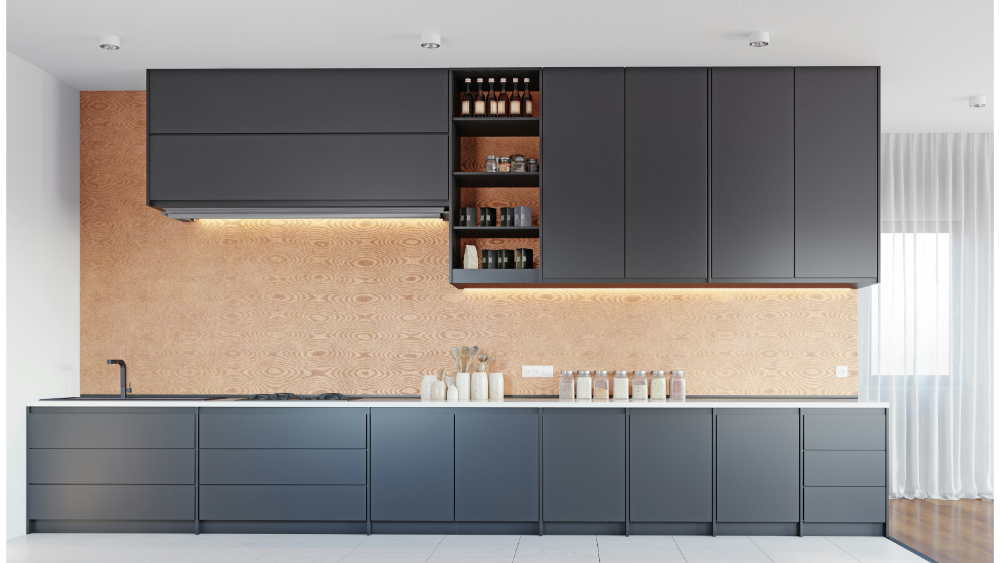
If you have open shelving or glass-front cabinets, consider the “Sandwich Method”—a visual balance trick that places the most decorative or uniform items on the top and bottom shelves, with the most functional items in the middle. It keeps your shelves looking styled but still practical. You can reserve your top shelf for rarely used items like special glassware or seasonal dishes.
Use Clear Containers and Consistent Labels
Clear containers make it easy to see what you have and when you’re running low. Use matching bins, labeled containers, or jars to create a clean, cohesive look. Add uniform labels to each container so the entire household knows where things belong—no more digging through clutter or guessing what’s inside. This kind of visual order not only looks great but makes life easier every day.
Step 5 – Maintain Your Organized Kitchen Long-Term
Set Weekly or Monthly “Reset” Days
 Set Weekly or Monthly “Reset” Days
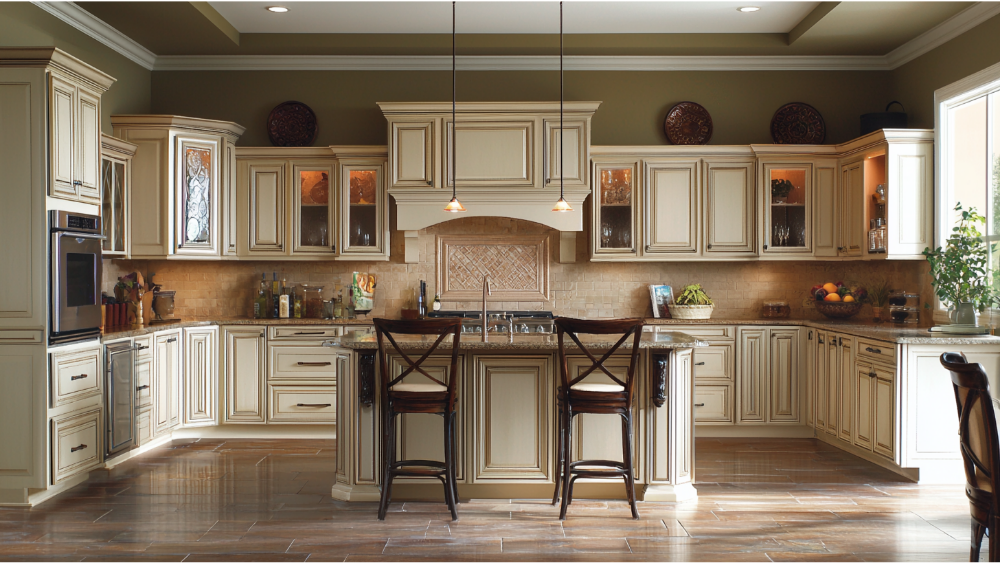
Just like your home needs a spring cleaning, your cabinets need regular resets. Take 10–15 minutes once a week or a full hour monthly to tidy up, toss expired food, and return items to their zones. This habit keeps your kitchen organized and running smoothly without major overhauls.
Involve the Whole Household
An organized kitchen only works if everyone’s on board. Make systems intuitive and accessible—use clear bins, open shelving, and easy-to-read labels. Encourage each household member to help keep everything in its proper place and follow simple rules like “one in, one out” for kitchen gear to prevent clutter creep.
Kitchen Cabinet Organization Ideas by Cabinet Type
Base Cabinets
Deep drawer dividers are perfect for sorting large utensils, cutting boards, baking pans, and cleaning supplies. Pull-out trash and recycling bins keep messes hidden and odors contained. For cookware, use wide drawers with soft-close glides or two-tier pull-outs to store pots and pans in a way that maximizes space.
Upper Cabinets
Use risers to stack plates and bowls, or install small wire shelves to double shelf space. Corral tall spice jars, pantry items, canned goods, or plastic containers in clear bins for easy access. For rarely used dishes or specialty glassware, store them on the top shelf and label accordingly to avoid confusion later.
Corner Cabinets
Corner cabinets are notoriously difficult—but not with the right accessories. Install a lazy Susan, swing-out shelves, or blind corner pull-out systems to turn wasted space into functional extra storage for bulky items, overflow pantry goods, or breakfast items.
When to Consider Custom Cabinets for More Storage Space and Better Organization
Sometimes, no matter how much you declutter or reorganize, your cabinets just aren’t cutting it. If your storage isn’t working or your layout feels cramped, it might be time for a new kitchen design. At Kitchen Search, our design experts create tailored cabinet solutions that work with your space, style, and storage needs.
Whether it’s soft-close drawers with utensil compartments, vertical dividers for baking pans, built-in shelf risers, or concealed spaces for your coffee station, we design with real-life function in mind.
Ready to transform your kitchen? Book your free design consultation today.
Frequently Asked How to Organize Your Kitchen Cabinets Questions
How do you decide where to put things in kitchen cabinets?
 How do you decide where to put things in kitchen cabinets?
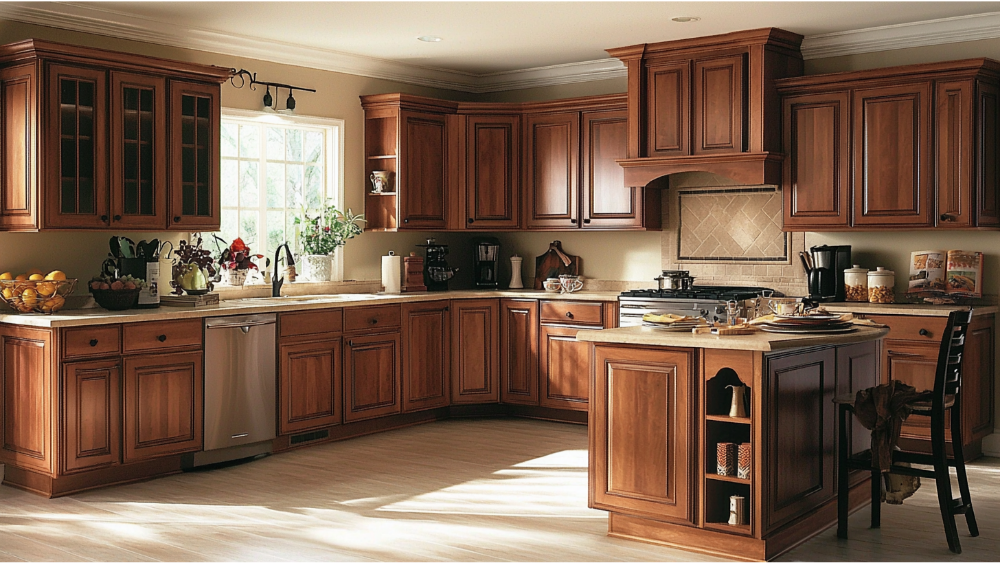
At Kitchen Search, we recommend organizing your cabinets by creating functional zones—grouping items based on how and where you use them. Everyday essentials should be stored at eye level, while specialty or seasonal items can go up high or down low. This approach makes your kitchen more intuitive, efficient, and easy to maintain.
Should food go in upper or lower cabinets?
Food is best stored in upper cabinets or a dedicated pantry to keep it visible, accessible, and away from heat sources. Reserve lower cabinets for heavier cookware, small appliances, or bulk items.
Where to put dishes and glasses in kitchen cabinets?
Dishes and glasses should be stored in upper cabinets near the dishwasher or sink to make unloading quick and convenient. Everyday items go at eye level, while special occasion pieces can be placed higher up. At Kitchen Search, we design cabinet layouts that keep your kitchen flowing smoothly from cleanup to mealtime.
Ready to Take Your Kitchen Cabinets to the Next Level?
Kitchen cabinet organization isn’t just about tidying up—it’s about creating a space that works for you. Whether you’re making small tweaks with organizers or ready to invest in custom cabinetry, every step brings you closer to a kitchen that feels functional, stylish, and entirely yours.
Let our team at Kitchen Search help you design a space where everything has its place. We’re here to bring beauty, order, and efficiency to the heart of your home.
Schedule your free in-home design consultation today.
Contact us to get started.