Ultimate Guide to Choosing Inexpensive Kitchen Cabinets
Understanding Affordable Kitchen Cabinet Options
Stock vs. Semi-Custom vs. Custom Cabinets
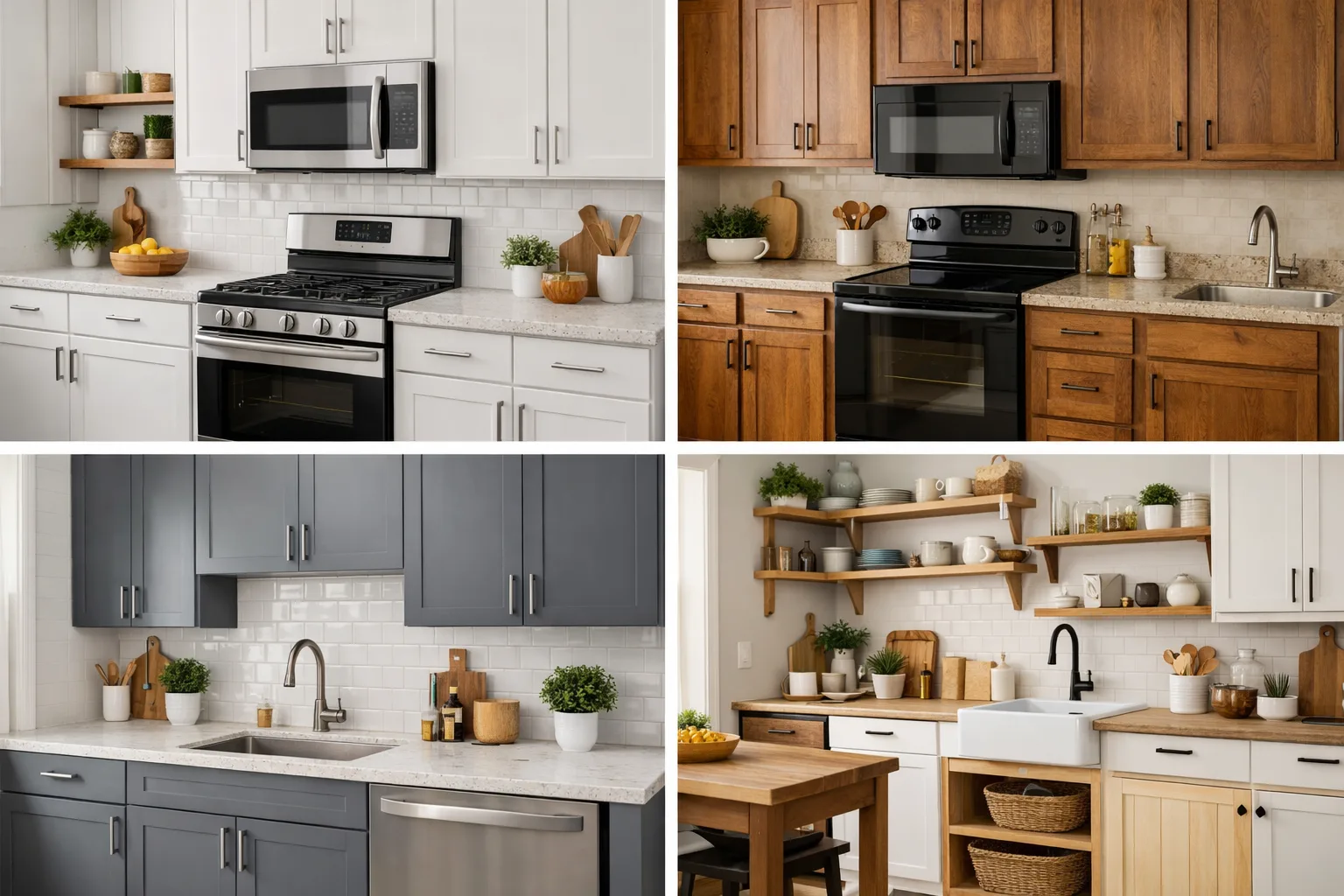
When choosing between stock, semi-custom, and custom cabinets, it’s essential to understand how these options affect both the cost and the final appearance of your kitchen. Stock cabinets are pre-manufactured in standard sizes and are the most budget-friendly option. They are available faster than custom alternatives, yet provide fewer options for modifications. Semi-custom cabinets, on the other hand, offer slight customization and a moderate price range, enabling you to tailor your cabinets to your specific needs more than stock cabinets. Custom cabinets provide the most flexibility in design and materials but come with a higher price tag. These are ideal for unique kitchen layouts or desired specific features.
Stock cabinets often come in limited styles, colors, and sizes but are cost-effective and a good starting point for a kitchen remodel. They are usually made from less expensive materials, enabling homeowners to save money while still achieving a functional and stylish kitchen. The advantage of semi-custom cabinets is that they balance quality with variability. While they are more expensive than stock options, they allow for some personal flair without the custom cabinet price.
In contrast, custom cabinets are an investment in design freedom and high-quality construction. They are built to precisely fit into kitchen spaces, ensuring optimal utilization of every nook and cranny. These cabinets are ideal for homeowners who want their dream kitchen to be a reality without compromise. However, they are a significant financial commitment, making them less ideal for tight budget remodels.
Each cabinet type has considerations beyond just the price. Homeowners should evaluate their kitchen renovation priorities—such as time constraints, desired functionality, and aesthetic preferences—when deciding which type of cabinets align with their kitchen dreams and budget capabilities.
Benefits of Ready-to-Assemble Cabinets
Ready-to-assemble (RTA) cabinets present an excellent option for those seeking inexpensive kitchen cabinets. These flat-packed units require assembly, making them perfect for DIY enthusiasts who wish to save on installation costs. The significant cost savings come from the reduced labor requirement compared to fully assembled cabinets, and shipping costs are often lower. The main allure of RTA cabinets is the combination of affordability, ease of transport, and a wide array of styles that allow them to fit into any kitchen layout seamlessly.
Assembling RTA cabinets is an approachable project that offers satisfaction from hands-on contribution to your kitchen remodel. However, you’ll need to allocate adequate time and space to complete the assembly, and some level of handiness is required. Beware of the potential for missing components or complex instructions—factors that can prolong the process. The materials used in RTA cabinets are often of reasonable quality, contributing to their cost-effectiveness while providing durability suitable for most kitchens.
The convenience of ordering RTA cabinets online allows homeowners to quickly browse and purchase their preferred style without visiting a physical store. This online availability also means opportunities for reading customer reviews, which can offer insights and reassurances about product quality and ease of assembly. For those looking to transform their kitchen on a limited budget, RTA cabinets are an efficient and practical solution.
An essential consideration when opting for RTA cabinets is the degree of commitment required. While it saves money, the time investment should not be underestimated. Preparation is vital: ensure your workspace is organized and read through the instructions thoroughly to avoid common pitfalls that can arise from rushed assembly efforts. With diligence and patience, RTA cabinets can be a wonderful addition to your kitchen renovation without stretching your budget.
Exploring Big-Box Store Solutions
Big-box stores such as IKEA, Home Depot, and Lowe’s provide dependable solutions for those seeking inexpensive kitchen cabinets. These retailers offer a wide selection of pre-manufactured cabinetry at competitive prices, often in convenient packages suitable for various kitchen layouts. For budget-conscious remodelers, these stores represent a gateway to stylish and functional kitchens without the financial burden typically associated with custom designs.
The purchasing process is generally straightforward, with extensive in-store displays and an array of online resources to help guide your decision. Big-box stores usually offer planning tools and design consultations, effectively minimizing the complexity of ensuring your cabinets will fit perfectly within your kitchen’s design parameters. This support can streamline your remodel process, providing peace of mind with professional confirmation of your choices.
Beyond just cabinets, big-box stores frequently carry complementary products such as countertops, accessories, and hardware—allowing for one-stop shopping experiences. This convenience eliminates the need to coordinate multiple vendors, and their standard return policies add a level of security for hesitant buyers. However, it’s crucial to inspect the quality of cabinets from these stores thoroughly; while many big-box retailers offer items at competitive prices, the variability in materials and craftsmanship can be significant.
**Quick Tip:** Always compare warranties offered by big-box solutions to ensure the longevity and satisfaction of your purchase. Many offer extended, value-added assurances for minimal additional costs that can ensure long-term happiness with your chosen cabinets.
Material Choices for Budget-Friendly Cabinets
Eco-Friendly and Sustainable Materials
Choosing materials that are both eco-friendly and sustainable has become a priority for many homeowners seeking budget-friendly kitchen cabinets. When looking at cost efficiencies and environmental impact, options such as bamboo, reclaimed wood, and rapidly renewable materials are smart choices. These options are not only affordable but provide a responsible way to contribute to environmental sustainability.
Bamboo is particularly notable due to its rapid growth rate, ease of harvest, and renewability, making it both a cost-effective and ecological choice. Reclaimed wood is another viable option as it utilizes materials that have previously served other purposes, thereby reducing the need for fresh lumber and further conserving natural resources. Homeowners pursuing green kitchen remodels can enjoy the dual benefit of supporting the environment while saving on raw material costs.
It’s essential to inquire about any formaldehyde reductions in low-emitting materials and ensure they comply with certifications like CARB Phase 2 or similar regulations. Companies focused on eco-conscious practices often have these certifications, indicating their products are safer for indoor air quality. These credentials provide a strong basis for informed purchasing decisions and ultimately benefit personal health as well as the environment.
Developing a sustainable kitchen doesn’t necessarily mean compromising on style or quality. Eco-friendly options often come in a variety of appealing designs that enhance any kitchen aesthetic. Remember, it is possible to have an elegant kitchen that prioritizes both budget and environmental responsibility, ensuring a holistic approach to modern living.
Comparing MDF, Plywood, and Particleboard
When exploring materials for budget-friendly kitchen cabinets, understanding the pros and cons of medium-density fiberboard (MDF), plywood, and particleboard is crucial. These materials often serve as the backbone of affordable cabinet solutions, each with its own set of attributes and drawbacks.
MDF is a popular choice due to its smooth surface, making it excellent for paint application. It is an engineered wood product composed of fine wood fibers, giving it a uniform appearance without graininess typical of natural wood. However, it is heavier than alternatives and doesn’t fare well in moisture-rich environments, making it less desirable for areas prone to dampness.
Plywood is an upgrade over MDF in terms of durability and moisture resistance. Constructed from layers of wood veneer glued together, plywood offers impressive strength and is a preferred material in areas where cabinets may face heavy use. It is a bit more expensive than particleboard and MDF but generally ensures a better return on investment due to its longevity and sturdiness.
Particleboard is the most cost-effective option, consisting of wood chips and sawdust bonded with resin. While affordable, it’s also more susceptible to moisture damage and less resilient under heavy load compared to plywood. Homeowners should consider particleboard for applications where budget constraints take precedence over durability, knowing it may not provide the same lifespan as higher-end materials.
Each material presents unique characteristics. When choosing the best fit for your kitchen, consider the specific needs, environmental factors, and expected lifespan to make a wise investment in your kitchen cabinets.
Pros and Cons of Laminate and Thermofoil
Laminate and thermofoil are popular finishes for kitchen cabinets, especially when affordability is a chief concern. Laminate cabinets feature sturdy plastic coatings bonded to particleboard or MDF, offering a vast selection of colors and designs conducive to modern or traditional kitchen aesthetics. The main advantages include ease of cleaning and resistance to stains.
On the downside, laminates can peel over time, particularly in high-moisture areas such as kitchens. The same concerns extend to thermofoil, which consists of a plastic vinyl layer that is vacuum-pressed to adhere to cabinet components. Thermofoil is usually more uniform in finish than laminate, which gives it a sleek look that many homeowners appreciate.
However, thermofoil is not without its challenges. Like laminate, exposure to heat can lead to peeling or warping. Care should be taken in placement relative to heat-emitting appliances, or heat shields can be used as a preventative measure. Despite these constraints, the range of styles and ease of maintenance makes these options popular among those seeking economical kitchen renovations.
**Quick Tip:** Select cabinet finishes based on lifestyle need. Busy households with younger children might choose resilient laminates that can withstand daily wear, while fashion-conscious homeowners might prioritize thermofoil for its sleek appearance.
Design Tips for High-End Look on a Budget
Selecting the Right Color and Finish
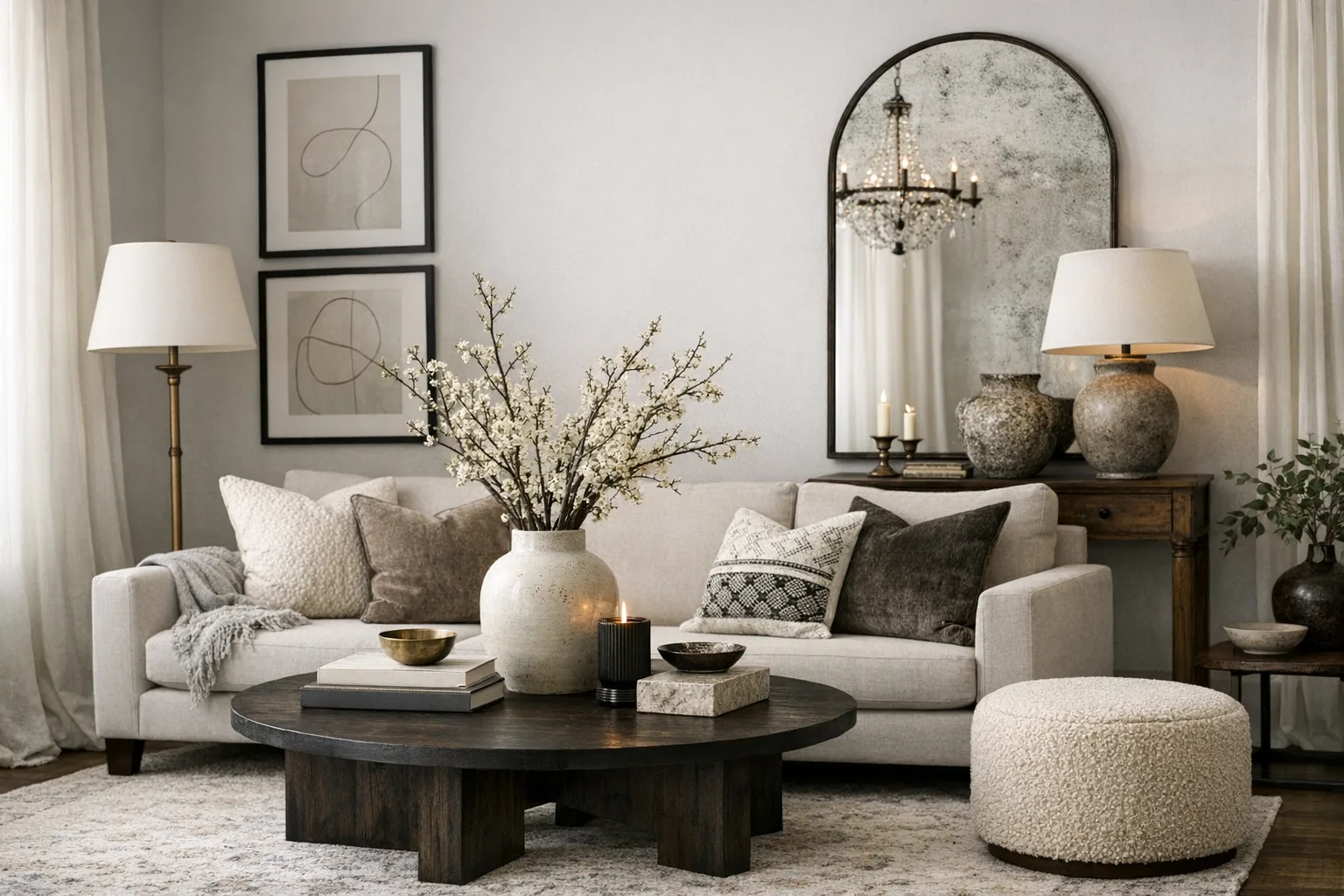
Colors and finishes are transformative elements in elevating the aesthetic of inexpensive kitchen cabinets to resemble more high-end alternatives. While customization can be restricted with budget-friendly options, choosing trendy and versatile colors, like soft neutrals or bold hues, can dramatically alter how the cabinets are perceived.
An elegant finish doesn’t necessarily require investment in costly materials. Matte finishes, for example, hide minor imperfections better than gloss finishes and can give an understated, sophisticated appearance. Meanwhile, bold color choices like midnight blues or deep greens are increasingly popular, offering a touch of individuality while remaining timeless and chic.
Incorporating a two-tone design strategy creates visual interest and distinguishes your kitchen’s design without inflating the budget. Try using lighter shades on the upper cabinets to open up the space, while experimenting with darker hues on lower cabinets for a grounding effect. Combining such colors intelligently creates a nuanced look that belies the actual cost of the cabinet materials.
The kitchen is a focal point in any home, so aligning the cabinet colors with the overall style and tones of the living space can enhance cohesion and tied elements aesthetically together. This harmony can elevate the entire living experience, making inexpensive cabinets feel integrated in your living environment.
Smart Use of Hardware and Accessories
Hardware and accessories are often overlooked as simple functional components, but they possess tremendous potential to enhance the overall visual appeal of inexpensive kitchen cabinets. The strategic introduction of unique cabinet hardware can act as a form of jewelry for your kitchen space, effectively amplifying the elegance factor without significant cost.
Hardware comes in various styles and finishes—ranging from sleek satin nickel to rustic oil-rubbed bronze. Select hardware that either complements the cabinet style or intentionally contrasts it to add depth and interest to the kitchen design. Their ability to be swapped out as trends change is an added advantage, allowing straightforward updates that don’t break the bank.
Accessories like lazy susans, custom pull-out trays, and drawer organizers contribute to both the functionality and perception of quality in budget kitchens. These improvements may not be immediately visible, but they imbue your kitchen with a sense of custom craftsmanship typically associated with more expensive renovation projects.
Optimal hardware selection extends beyond aesthetic appeal. Considerations like ergonomic design for ease of use and durability ensure these elements serve both decorative and practical functions. By addressing these small details, homeowners can achieve a refined kitchen ambiance regardless of the cabinetry’s initial cost.
Incorporating Glass and Open Shelving
Incorporating glass elements or open shelving into your kitchen design offers another pathway to achieve a luxurious look on a budget. Glass cabinet doors introduce an element of loftiness and expansiveness, creating the illusion of additional space and rendering an elegant, airy sensibility.
Frosted or textured glass can subtly obscure interior cabinet contents while providing visual interest. This simple addition elevates your cabinets by drawing attention away from cost-saving cabinetry materials. Simultaneously, open shelving offers the chance to showcase items or decorative pieces, adding personality and warmth to the space.
This flexibility allows for seasonal or occasional rearrangement, keeping your decor current and stylish. Open shelving extends an inviting aura, encouraging interaction with the kitchen and perfecting the artful display of crockery or culinary paraphernalia.
Glass additions, in conjunction with open shelves, effectively leverage light and sightlines in the kitchen. The harmonious integration of these components gives the feeling of a bespoke design, which is highly sought after for those conscious of maximizing their home’s value and aesthetic appeal on a conservative budget.
Technical Deep Dive: Cabinet Installation
DIY vs. Professional Installation
The decision about whether to install inexpensive kitchen cabinets yourself or to hire a professional installer is a significant one, often swinging between budget considerations and personal confidence in DIY skills. Both methods offer unique benefits and challenges, making the right choice dependent on individual circumstances and project scope.
DIY installation, though tempting for savings on labor, demands a solid understanding of carpentry basics. Installers need to be prepared for tasks such as properly leveling cabinets, aligning doors, and ensuring overall structural integrity. Mistakes during DIY installations can lead to costly repairs or replacements, underlining the importance of meticulous planning and execution. For confident DIY enthusiasts, the process can be rewarding.
Professional installation guarantees expertise, efficiency, and access to specialized tools. Hiring installers means relinquishing control, but it also mitigates the risk of errors that could compromise cabinet longevity or kitchen functionality. Professionally installed cabinets might also include warranties, providing peace of mind in the long run.
Balancing budget and skill, some homeowners opt for a hybrid approach—installing simpler base cabinets themselves while delegating intricate work, like fitting upper cabinets or custom features, to professionals. This compromise preserves some savings while ensuring quality and adherence to industry standards.
Essential Tools and Equipment
Embarking on a kitchen cabinet installation project requires knowledge of the essential tools and equipment necessary to ensure a smooth and successful process. Whether a DIY task or professional oversight, having tools like drills, levels, tape measures, and stud finders at your disposal is critical to achieving precise and secure cabinet installations.
Drills, paired with corresponding driver bits, expedite hole creation and screw installation. Accurate leveling employs a spirit or laser level, ensuring the cabinets align evenly along vertical and horizontal planes. These tools prevent misalignments that could otherwise detract from both aesthetics and utility.
Before beginning the installation, a tape measure helps you confirm cabinet dimensions and space requirements, laying groundwork for flawless fitment. A stud finder becomes indispensable in securing cabinets to wall structures, providing stability and load-bearing assurance critical to the cabinetry’s lifespan and performance.
Additional items, such as clamps, shims, and safety gear, round out a comprehensive toolkit equipped to handle challenges that might arise. By prioritizing readiness, installers—whether DIY enthusiasts or professionals—set themselves up for a straighter path to achieving their vision of an improved kitchen environment.
Step-by-Step Installation Process
Step-by-step guidance simplifies the kitchen cabinet installation process, making this complex undertaking more accessible and manageable. The initiative begins by properly prepping the space, ensuring the walls and floors are clean, level, and ready to support new cabinetry. Map out electrical and plumbing elements that cabinets must accommodate.
Begin with installing the upper cabinets, as these are easier to fit in place without lower cabinetry constraints. Locate wall studs using a finder, and drill pilot holes for mounting screws, maintaining alignment with spirit or laser levels. Install subsequent upper cabinets in a sequence that secures them effectively to one another, maintaining alignment and level consistency as you progress.
Once upper cabinets are in place, move on to lower cabinets. Start by marking the high point of the floor to set base cabinets level. Use shims to compensate for irregularities, ensuring the cabinetry rests evenly and securely. Fasten cabinets using appropriate screws, and check clearances for doors, drawers, and countertops.
With bases secured, proceed to install cabinet doors, drawers, and any necessary shelves or organizational accessories. Final refinements include hiding visible screws with matching caps and applying caulking or weather strips as necessary to enhance seal quality and moisture protection.
**Quick Tip:** Perform a post-installation check on all components, including aligning and adjusting doors and drawers to ensure optimal operation free from obstruction or uneven usage.
Painting and Refacing Cabinets for a Fresh Look
DIY Cabinet Painting Techniques
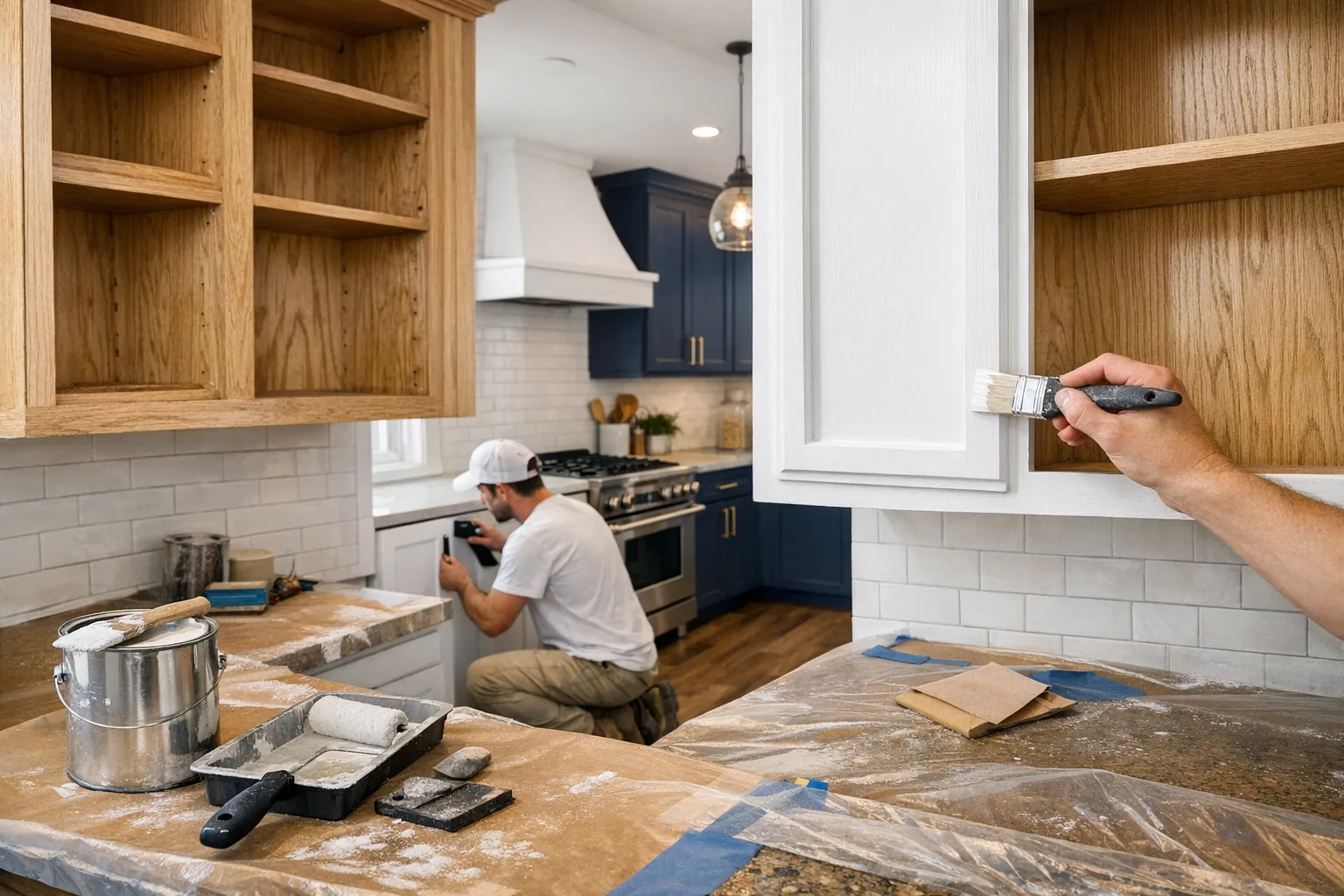
Refreshing kitchen cabinets through painting provides a significant visual update at a fraction of the cost of replacement. DIY painting demands careful planning and execution to ensure a professional-looking result. First, unscrew and remove cabinet doors and hardware, laying a foundation for direct, uninhibited access to surfaces.
Next, sand the cabinet surfaces to remove existing finish and provide a texture receptive to paint adhesion. Clean the sanded surfaces using a damp cloth to remove all dust and debris, maintaining optimal paint adherence. Before application, protect the surrounding area with drop cloths or painter’s tape to prevent any inadvertent messes.
Optimal results are achieved through primer application, which seals unfinished surfaces and prepares a uniform base coat. Select appropriate primers for the cabinet material in use and allow ample drying time between coats. With primer dry, apply the chosen paint in thin, even layers using high-quality brushes or rollers, opting for a semi-gloss or gloss finish for easy cleaning and minor incident resistance.
Multiple coats may be necessary to ensure the cabinet achieves your desired visual impact. Allow each coat to dry thoroughly and finish the process with a protective sealant, safeguarding the paint against moisture or wear, extending the revitalization’s longevity.
Choosing the Right Paint and Finish
Choosing the right paint and finish is integral to the success of kitchen cabinet painting projects. Different paints, including alkyd-based, waterborne, and acrylic-latex varieties, offer distinct benefits and drawbacks. Alkyd paints exhibit excellent adhesion and durability, ideal for high-traffic areas, though they require careful ventilation due to chemical odors.
Waterborne paints, such as acrylic paints, are eco-friendly with low VOC (volatile organic compound) emissions, offering healthier choices for indoor usage. Acrylic paints dry hard and are extremely durable, providing excellent coverage and resistance to common kitchen mishaps like spills and knocks
Finish selection revolves around practicality and style. Gloss or high-gloss finishes reflect light and impart brightness to the kitchen, but their susceptibility to showing imperfections requires careful base preparation. Satin or semi-gloss provides a balanced approach, delivering a sleek satin-like appearance without the glossiness, with practical easy-clean attributes suitable for kitchens.
Consider color choices carefully, as they significantly impact the kitchen’s perception, affecting elements from ambient lighting to perceived size. Light and neutral shades can make small or dim spaces feel open and airy, whereas darker tones can add warmth and sophistication, perfectly complementing certain existing decor themes.
Cabinet Refacing: A Cost-Effective Alternative
Refacing cabinets offers an alternative to full-scale replacement, providing a transformative effect while preserving existing cabinet structures. This method entails replacing cabinet doors, drawer fronts, and hardware while retaining original cabinets, effectively delivering a fresh style without the challenges or expense of complete demolition and reconstruction.
The process involves choosing new door styles and colors that align with the desired kitchen aesthetic. Compatible moldings, trims, and finishes can be added to elevate the professional component appeal. Homeowners benefit from a reduced renovation timeline as well as cost savings associated with materials and installation.
Prior to committing to refacing, survey the condition of the existing cabinet structures ensuring they’re free of significant damage or degradation, as these factors might necessitate outright disposal. Properly executed, refacing delivers the aesthetics of new cabinetry while avoiding many logistical complexities inherent in full remodel undertakings.
**Quick Tip:** When choosing materials for refacing, balance cost considerations with durability. Surface finishes must withstand regular kitchen conditions, so laminate or rigid thermal foil finishes are frequently employed thanks to their longevity and extensive design ranges.
Sustainable and Eco-Friendly Cabinet Options
Benefits of Eco-Friendly Cabinets
Eco-friendly cabinets offer a host of benefits that go beyond environmental impact, extending into health, longevity, and even ROI for homeowners. The production of sustainable cabinets involves environmentally friendly practices, such as using sustainable materials, reducing toxins, and improving energy efficiency in the manufacturing process.
These cabinets often utilize rapidly renewable resources such as bamboo or recycled materials, minimizing waste and deforestation. Additionally, they’re usually free of toxic substances like formaldehyde, contributing to healthier indoor air quality—an invaluable attribute for household members, especially those with allergies or respiratory sensitivities.
Choosing eco-friendly cabinets can also have long-term financial advantages. Their durability often yields longer lifespans and reduced maintenance or replacement costs. Investing in eco-friendly options is also increasingly recognized as a selling point in real estate, potentially enhancing property value and marketability.
When evaluating your kitchen remodel, prioritize not only personal and environmental welfare but potential returns on the investment, considering how sustainable cabinetry may factor into future resale scenarios.
Certifications to Look For
Certifications are pivotal in recognizing environmentally proactive products and providing peace of mind to buyers that materials meet environmental and health standards. Key certifications to be aware of include the Forest Stewardship Council (FSC), which denotes responsibly sourced wood, and the Greenguard certification, indicative of reduced indoor air pollutants.
The Kitchen Cabinet Manufacturers Association (KCMA) Environmental Stewardship Program (ESP) acts as another guideline, certifying both sustainable sourcing and energy-efficient manufacturing procedures. This certification assures adherence to strict environmentally progressive practices from harvesting through to production.
Purchasing cabinets that meet CARB (California Air Resources Board) compliance indicates minimized levels of formaldehyde emissions, ensuring compatibility with stringent indoor air quality standards while offering reputable assurances against high VOC exposure.
**Quick Tip:** Always verify certifications by consulting the certifying bodies’ websites to confirm authenticity and scope. Transparency ensures you make informed decisions, supporting eco-friendly manufacturers held accountable to green production standards.
Where to Source Sustainable Materials
Sourcing sustainable materials begins by associating with reputable manufacturers and retailers dedicated to eco-friendly practices. Many big-box retailers include eco-conscious lines and collections among their stock, easily identifiable through designated logos, certifications, or specified eco-friendly attributes.
Alternatively, specialty businesses focus exclusively on the manufacturing and distribution of sustainable, green-certified products. These companies may offer customization services, tailoring cabinets directly to eco-specific criteria without sacrificing aesthetic flexibility and design options.
Online platforms, like Kitchen Search’s website, can offer insights into modern kitchen cabinet ideas while showcasing eco-friendly brands and options available for direct purchasing. Such resources allow for comparative research and user reviews to gauge craftsmanship quality and long-term satisfaction.
Wherever sustainable products are purchased, always confirm compatibility with your remodeling project’s goals and aesthetic requirements to balance beauty, longevity, and environmental considerations in transforming your kitchen into a more sustainable space.
Maximizing ROI with Budget Cabinets
Impact of Cabinets on Home Value
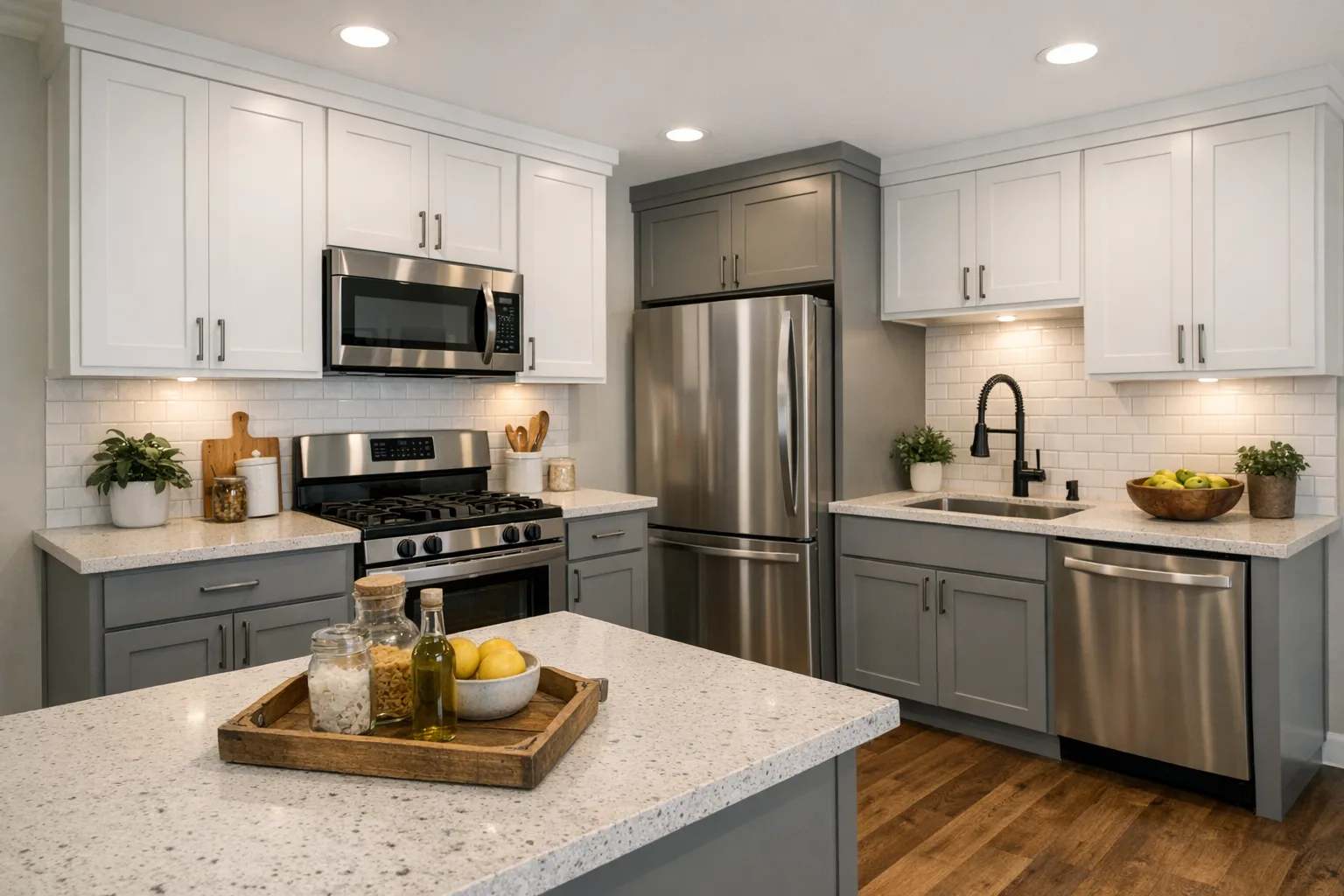
Kitchen cabinets play a critical role in shaping home value, directly influencing aesthetics, functionality, and buyer perception. Budget-friendly cabinets, when thoughtfully integrated, can provide substantial returns, ensuring optimal expenditure-to-gain ratios during resale evaluations.
Today’s real estate market sees kitchens as primary selling points. Providing an attractive kitchen, complete with durable and stylish cabinetry, significantly increases desirability, potentially commanding a higher sale price. Affordable cabinet solutions allow homeowners to refresh their kitchen’s appearance, culminating in an attractive selling proposition without the cost burden associated with premium installations.
The strategic renovation of kitchen cabinets aligns with the timeless appeal and functionality expectations of contemporary buyers. While costly, comprehensive remodels may not be feasible for all, inexpensive solutions accentuating desirable features provide viable alternatives—rendering kitchens adaptable and rejuvenated.
Buyers often focus on both practicality and presentation when assessing cabinetry. Ensuring streamlined, accessible storage solutions and complementary aesthetic finishes can mold prospective buyers’ impressions, ultimately elevating home market value.
Balancing Cost with Quality
Balancing the act between cost-effectiveness and high-quality outcomes is paramount when considering budget cabinets. Compromises in material choice can yield significant savings, but must be weighed against potential longevity, environmental impact, and overall aesthetic objectives.
To preserve quality, pay attention to cabinet construction techniques—favor materials and assembly processes that ensure durability and avoid cutting corners, especially in areas prone to wear and tear. Securing warranties can alleviate potential concerns regarding cost-saving products, providing peace of mind while maintaining budget control.
Simultaneously, approaches that enhance savings, such as volume purchasing or DIY assembly, should be explored. Effective cost management, through collaboration with vendors and use of purchasing incentives like bulk discounts, optimizes expenditure without devaluing kitchen modernization.
Ultimately, focusing on quality doesn’t entail an expenditure beyond means; it requires a nuanced understanding of opportunities and management, designing solutions that meet personal ambitions while maintaining practical balance.
Long-Term Benefits of Affordable Options
Exploring long-term benefits of budget-friendly cabinets highlights the range from immediate improvements in aesthetics to enduring enhancements in overall home quality. Prioritized use of durable materials and construction methods extends the lifespan of budget cabinetry, delivering added value to homeowners.
While up-front savings direct attention toward affordable cabinet options, durable finishes and adaptable styles sustain appeal and functionality over time, increasing value through continuous performance. Initial relative savings can be reallocated toward complementary kitchen improvements, further maximizing ROI.
The versatile attributes of affordable cabinets—highlighted by inexpensive refacing or repainting capabilities—ensure ongoing user satisfaction. They provide flexibility to accommodate evolving design trends or personal tastes, rendering space adaptable with minimal financial outlay.
**Quick Tip:** Approach cabinet installations as investments toward home’s longevity and vitality, aligning with budget management goals to achieve both immediate and extended value realization.
Common Pitfalls to Avoid When Buying Budget Cabinets
Mistakes in Measuring and Ordering
Among the most common pitfalls when buying budget cabinets are errors in measuring and ordering, with lasting consequences. Precise measurements guarantee proper fitment, ensuring safe and functional installations that align with original design intentions.
Begin by measuring the existing space immediately, twice to ensure consistency and accuracy. Ensure the account includes allowances for appliance locations, plumbing, electrical outlets, and other permanent features. Overlooking such elements can skew final orders, resulting in ill-fitting cabinets that require costly modifications.
Dimension-related missteps aren’t confined to the cabinet itself. Document intended configurations, including door swings and outlet sizes, ensuring appliance compatibility with integrated design choices. Time spent aligning functionality with aesthetic criteria prevents potential oversights that could derail kitchen installations.
When ordering budget cabinets, consult professional guidance ensuring necessary clarity in communication to suppliers, avoiding unnecessary recalls or exchanges. This precision reduces financial strain and absurd contingencies, paving the way for efficient use of cabinet components.
Overlooking Hardware Costs
Hardware costs are repeatedly overlooked when calculating budget cabinet expenses, undermining proposed savings. Locking down designs before finalizing cabinet purchases aligns fixtures with preferences and consistent cabinet styles, addressing potential miscalculations.
As a general rule, replacement cost disparities connect to budget impacts resulting from hardware misalignments. Proactively estimating requirement quantities curates anticipated expense outlay, ensuring misaligned accounts receive appropriate adjustments.
Hardware selections, extending into attachment specifics beyond handles or knobs, require prudence to retain stylistic harmoniousness while addressing budget challenges. Comprehensive insights, including additional hardware requirements—dovetailing cabinet operation—ensures fully integrated installations.
**Quick Tip:** Browse online catalogs for hardware alternatives, identifying affordable options in anticipation of final cabinet placements, reducing time spent sourcing often unseen but integral components.
Ignoring Warranty and Return Policies
Warranties and return policies provide a safeguard against potential dissatisfaction with new cabinet purchases; thus, overlooking these aspects risks unnecessary financial exposure. Scrutinize vendor policies, ensuring compliance with return conditions, dealing specifically with design conformity or functional discrepancies.
Warranties factor into initial purchase decisions; understanding covered faults enables proactive management of unanticipated maintenance, an aspect safeguarding long-term cabinet value with minimal upfront expenditure.
Constructing a roadmap grounded in warranty detail protects against unexpected outlays, facilitating ease of component replacement or adjustment in cases of manufacturing defects, maintaining kitchen form over prolonged usage.
Local Solutions: Finding Affordable Cabinets Near You
Researching Local Suppliers and Showrooms
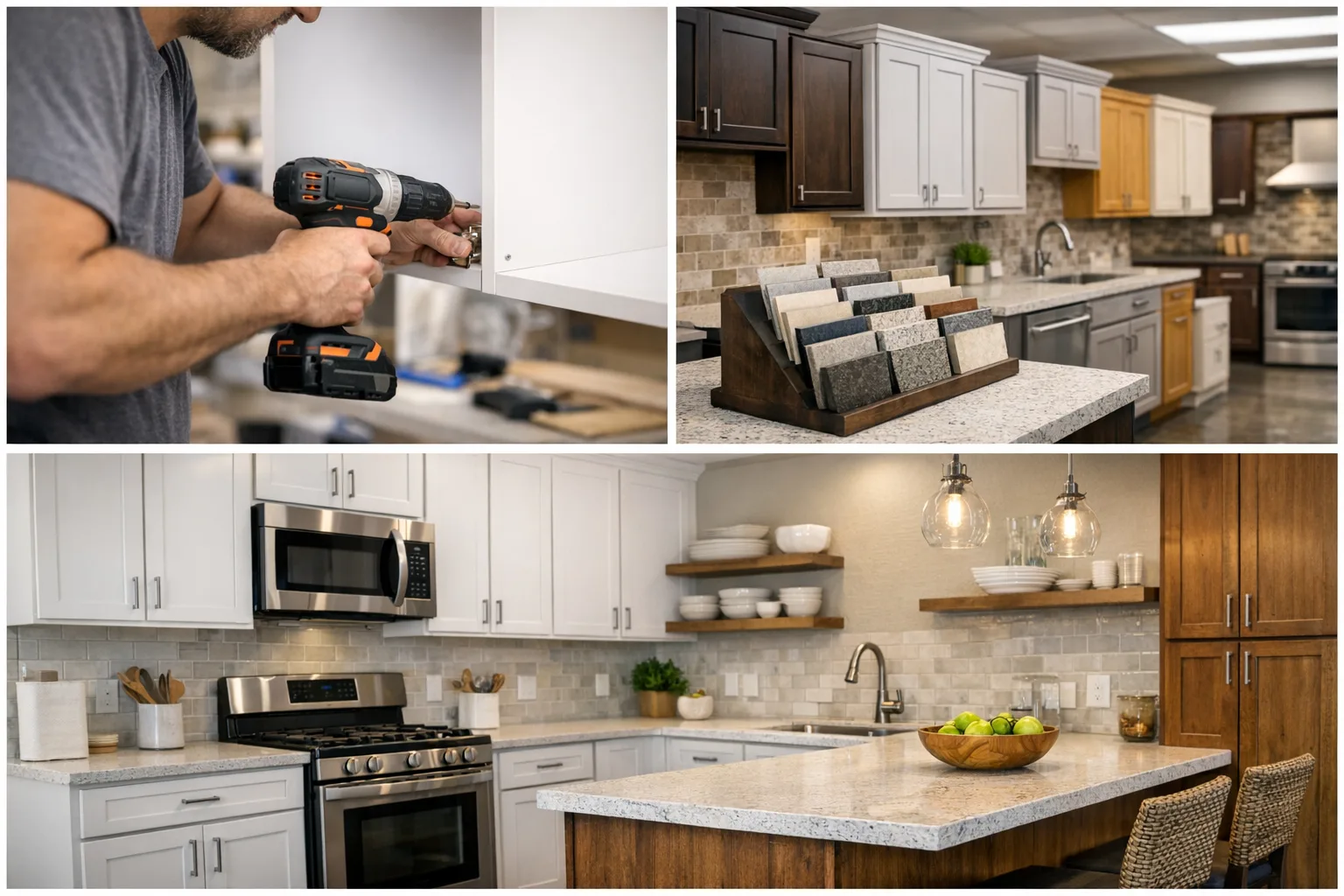
When seeking affordable kitchen cabinets, researching local suppliers and showrooms is vital. Local businesses offer insights into regional trends and preferences, potentially embodying styles that seamlessly integrate with existing architectural features common to the area.
Local suppliers often offer competitive prices and personalized services, ensuring ease in navigating material options to plan and design your ideal kitchen. They’ll likely offer the opportunity to physically evaluate cabinet samples, determining quality levels and assessing visual representations beyond digital portrayals.
The intimate connection between customers and local suppliers can also extend into deeper aspects of installations, factoring accountability into services rendered—where positive recommendations strengthen trust in professional offerings open to continuous development.
Partner with suppliers offering tailored consultation services, cultivating designs centering homeowner desires while assuring compliance with fiscal outlay. Through participatory efforts, understandings between capabilities and aspirations align seamlessly with local cabinetry offerings.
Online vs. In-Store Purchases
The decision between online and in-store purchases of affordable kitchen cabinets, like many others, includes weight considerations encompassing logistical challenges, vendor-specific experiences, and consumer convenience.
Online platforms place a wealth of choices directly at buyers’ fingertips, encouraging price comparisons and evaluations based on extensive user feedback. Digital showrooms increase flexibility, providing virtual consultations and desktop software ensuring both aesthetics and specifications integrate perfectly with kitchen layouts.
In-store purchases, meanwhile, eliminate wait time associated with shipment processes, delivering immediate feedback which digital platforms cannot replicate. Engaging directly with professionals can lead to unique solutions not accessible when solely relying on pre-configured online suggestions.
**Quick Tip:** Prioritize diversified approaches by utilizing online research in conjunction with in-store visits. Maintaining a pulse on dynamic suppliers ensures adaptive responses to market trends and consumer preference shifts, maximizing insights to refine kitchen cabinetry solutions.
Tailoring Solutions to Local Styles and Trends
Acknowledging the local palette is crucial for integrating affordable cabinets into existing or favored styles. Local trends, whether rooted in architectural influence or community preference, often define distinctly personalized directions to shape kitchen interior designs.
Understanding your locale’s distinctive styling nuances offers added assurance, resulting in cohesive aesthetics that resonate with a local audience as well as potential future buyers. Adapting cabinet solutions to harmonize site-specific characteristics emphasizes cohesion and continuity, maintaining visual appeal across generations.
Local suppliers keenly attuned to these specifications possess intimate knowledge pivotal to design’s success. Incorporating advice that complements your kitchen’s space, orientation, and accessory pairings enhances both immediate and residual investment effectiveness through tailored local solutions.
Ultimately, focus on hearing from respected voices within your community. Employ insights reflective of areas with experiences aligning comprehension with requirements—filling gaps that assure conversions tailored specifically toward your budgetary scope.
Making the Final Decision: Choosing the Right Cabinet for Your Kitchen
Aligning Style with Budget
Finalizing a cabinet decision involves harmonizing style and budget, ensuring long-term satisfaction while remaining financially responsible. Reflecting aspirations with feasible plans sets expectations realistically, allowing callous adjustments that soothe potential buyer’s remorse.
Contemplate aesthetic approaches highlighted in your greater project narrative, bridging visual elements alongside functionality to achieve stunning results on limited expenditure. Integrations play open approaches, reevaluating design prompts amidst quickly shifting stylistic landscape within installations.
Professional insights fuse with personal desires through balanced redesign explorations. Investing time in understanding stylistic goals against kitchen usage highlights bearable compromises retaining harmony in selected cabinets without outstepping financial bounds.
**Quick Tip:** Consider resourcing dual-focused consultations—blending artistic perspectives with field scope dynamics trustees. Local suppliers may adjust considerations for cabinet choices, making aligned strategies yielding both visually successful and budget-compatible installations.
Consulting with Design Experts
Working with industry professionals provides assurance and peace of mind during selecting affordable kitchen cabinets, guiding selections through technical proficiency and design acumen.
Expert consultations help synthesize ideas and requirements to overcome obstacles inherent in creating a cooperative design for multifunctional spaces, against budget restrictions. Engage practitioners in discussions harmonizing structural aspects, ensuring ultimate suitability for client wishes aligned within resolved details.
Design professionals bring innovative resolutions by leveraging experience gained through industry trends and consumer insights. Professional guidance implements varied possibilities for space efficiency, harmonizing aesthetic functions through entirely focused council endeavors.
Evaluating Long-Term Needs and Lifestyle
Committing to final cabinet selections prescribes necessary evaluations, framing them against longevity traits necessary to fulfill desired lifestyles and requirements over time.
Considerations extend into foreseeable attributes, examining crucial compatibility with ongoing transformations during household development or adjustments specific to tastes. Split evaluations into primary sectors, considering potential requirements for craftsmanship and fit tested across room evolutions.
Establish understanding donning design plans addressing spatial integrity and focal interconnectivities pivotal throughout your fittings’ continued lifespan. Reconfigure choices that advance investments not only in appearance but practical suitability, ensuring perpetual functionality.
Ultimately, research thoroughly around available resources, comprehending professional angles guiding user lifestyles avoid overlooked trap pitfalls concealable during restaurant installations through rapidly concise exploration prowess.