
What Causes Countertop Cracking After Installation?
A cracked countertop after installation is one of the most frustrating issues homeowners face. You invest in a beautiful countertop surface, everything looks perfect, then suddenly a crack appears. It may begin as hairline cracks and slowly grow into larger damage that affects the entire countertop. Understanding what causes countertop cracking after installation is the first step to protecting your investment and avoiding costly repairs.
In most cases, countertop cracks are not random. Most cracks happen because of stress, heat, or improper installation. Whether you are dealing with quartz countertops, granite, marble, or other materials, the same core issues apply. At Kitchen Search, we focus on proper installation so every countertop is properly supported and built to last.
The Truth About Countertop Cracks After Installation
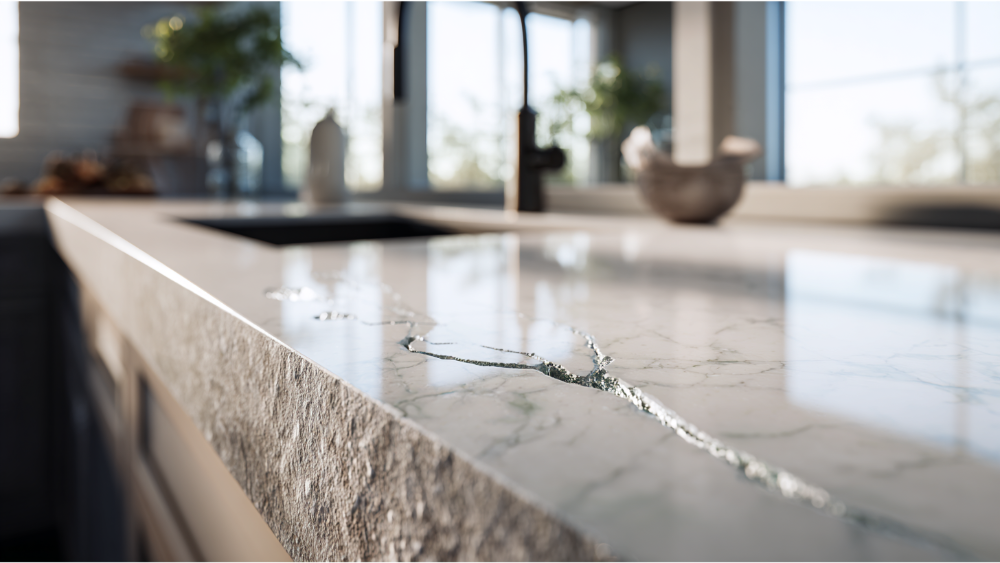
There is a common belief that a crack means the countertop material failed. In reality, most cracks are caused by external stress placed on the countertop surface. A countertop is incredibly durable, but it depends on cabinets and structure underneath for proper support.
When that structure is not stable, stress builds over time. That stress often concentrates at weak points like sink cutouts, seam locations, and corners. Eventually, crack formation becomes visible, even if the countertop was installed correctly at first.
This is completely normal in situations where uneven support or improper installation exists. The countertop surface itself is not the problem; the underlying structure is what leads to countertop cracks.
The Most Common Causes of Countertop Cracking
1 | Improper Cabinet Support and Leveling
Cabinets are the foundation of any countertop installation. If cabinets are not level, or if proper leveling is skipped, the countertop will sit unevenly. Uneven support creates stress points along the slab.
When a stone countertop is not properly supported, certain areas carry more weight than others. Over time, that pressure can create cracks, especially near the front edge, inside corner, or along corners. Uneven support is a common cause of structural cracks in stone countertops.
2 | Movement in Cabinets, Floors, or Structure
Homes naturally expand and contract due to moisture and temperature changes. Cabinets and flooring shift over time, and that movement transfers stress into the countertop.
This movement can create cracks slowly. Hairline cracks often appear first, then expand into larger structural cracks. It is common for a countertop to be installed and look perfect, then develop a crack months later because of movement in the structure beneath it.
3 | Heat Damage, Thermal Stress, and Thermal Shock
Heat is one of the most common reasons countertops crack, especially quartz countertops. Placing a hot pan or hot items directly on the countertop surface creates thermal shock. This sudden change in temperature causes the material to expand unevenly.
When one part of the countertop expands faster than another, thermal stress builds internally and can create cracks. Repeated heat exposure from slow cookers, large appliances, or hot pans increases the risk significantly.
Using heat pads helps prevent cracks and protects the countertop surface from heat damage. Without protection, thermal shock can eventually crack even an incredibly durable surface.
4 | Stress Around Sink Cutouts and Cooktop Areas
Sink cutouts are natural weak points in any countertop. Removing material for a sink creates areas where stress is concentrated, especially at cutout corners and inside corner transitions.
These areas are more likely to create cracks under pressure. A heavy sink, excessive weight, or lack of proper support underneath can create cracks that spread outward. The sink edge and surrounding corners are especially vulnerable if not properly supported.
5 | Poorly Installed or Unsupported Seams
Seams are necessary in many countertop designs, but they must be handled carefully. A seam that is not properly supported becomes a weak point. Over time, stress can cause the seam to separate or create cracks nearby.
Improper installation often leads to seam failure. A properly supported seam with correct epoxy application helps distribute stress evenly and prevents cracks from forming along the seam line.
6 | Overhangs Without Proper Support
Overhangs are common for seating areas, but they must be properly supported. Excessive weight from body weight, heavy objects, or daily use can cause the countertop to flex.
When a countertop is not properly supported, that flex creates stress. Over time, the surface can eventually crack. Brackets or supports are necessary to handle excessive weight and prevent cracks in these areas.
7 | Fabrication or Installation Errors
Some countertop cracks begin during fabrication or installation. Poor installation practices, improper installation, or mishandling the slab can create microfractures in the stone.
These small defects may not be visible right away, but over time they grow under stress and create cracks. This is why proper installation and experienced professionals are critical when installing countertops.
Which Countertop Materials Are Most Prone to Cracking?
Quartz Countertops
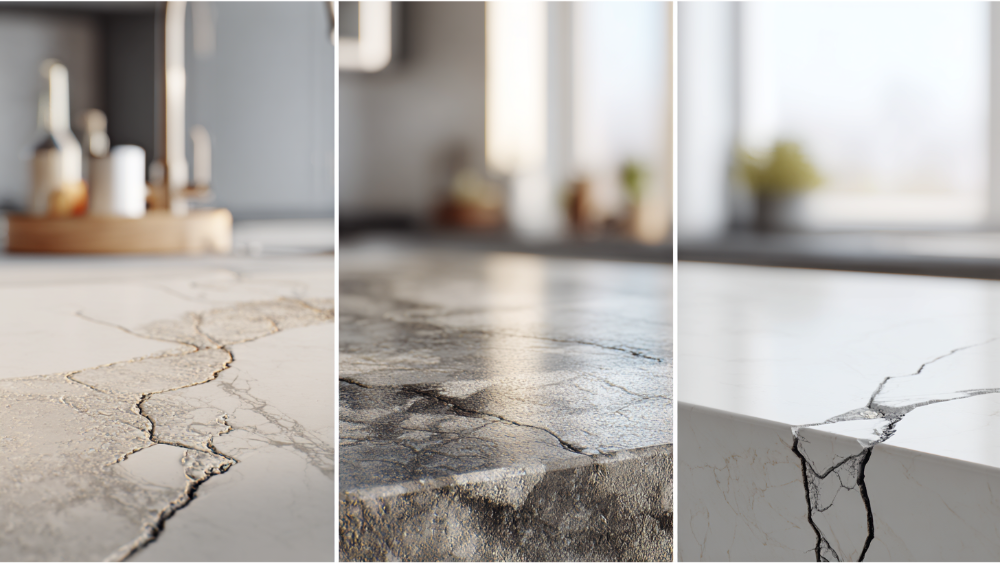
Quartz countertops are incredibly durable and low maintenance, but they are sensitive to heat. Placing a hot pan directly on quartz can cause thermal shock and create cracks, especially near edges and sink cutouts.
Quartz expands when exposed to heat, and without protection like heat pads, repeated heat exposure can lead to countertop cracks over time.
Granite and Natural Stone
Granite is one of the most popular stone countertops because it is strong and heat resistant. Natural stone like granite and marble can still crack under stress, especially at natural weak points such as veins or fissures.
Granite, marble, and other natural stone surfaces require proper support and proper installation to prevent cracks. Even though granite is incredibly durable, it can eventually crack under excessive weight or uneven support.
Porcelain and Other Materials
Porcelain and other materials are also durable, but they rely heavily on proper support. These materials are often thinner, which means uneven support or stress can create cracks more easily.
All materials require proper installation and proper support to avoid structural cracks.
Signs Your Countertop Was Installed Incorrectly
Hairline cracks near seams, sink cutouts, or corners are early warning signs. Uneven countertop surfaces, gaps between cabinets and countertop, or movement when pressure is applied all indicate problems.
If seams begin to separate or if the countertop does not sit flat, improper installation is likely the cause. These issues should be addressed quickly to prevent more damage.
How to Prevent Countertop Cracks Before They Happen
1 | Choose the Right Material for Your Lifestyle
Different materials respond differently to heat, moisture, and stress. Quartz countertops are low maintenance but sensitive to heat, while granite and natural stone handle heat better. Choosing the right material helps prevent cracks caused by everyday use.
2 | Ensure Proper Cabinet Preparation
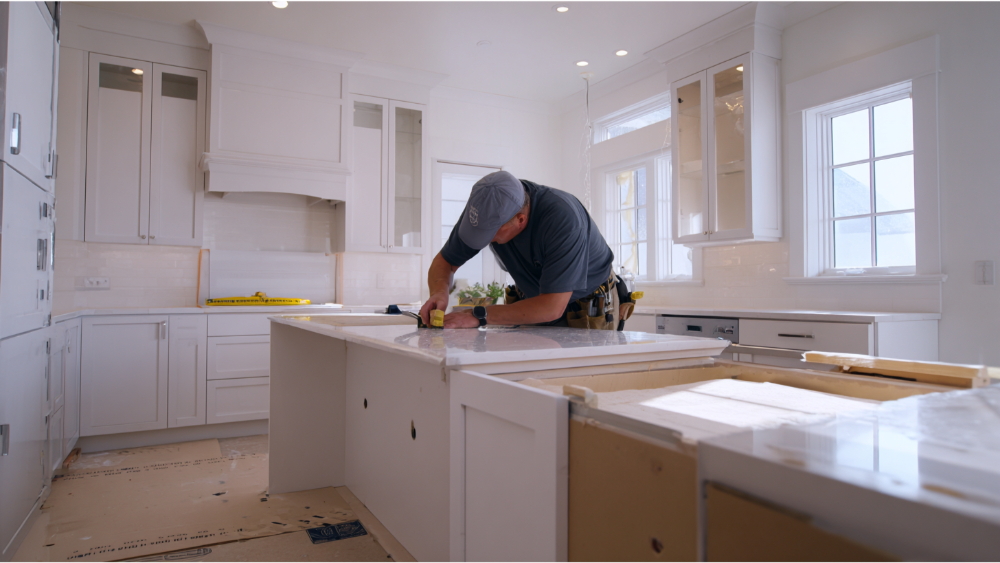
Cabinets must be level, secure, and properly supported before installing countertops. Proper leveling ensures the countertop sits evenly and reduces stress points. This step is critical to prevent cracks.
3 | Work With Experienced Fabricators and Installers
Proper installation is one of the most important factors in preventing countertop cracks. Experienced professionals ensure seams are correct, slabs are handled properly, and every countertop is properly supported. This avoids poor installation and improper installation issues.
4 | Use Proper Support for Overhangs and Cutouts
Overhangs, sink areas, and cooktop sections must be properly supported to handle heavy objects and excessive weight. Reinforcement reduces stress and prevents cracks from forming over time.
5 | Protect Against Heat and Daily Stress
Avoid placing a hot pan or hot items directly on the countertop. Use heat pads and avoid repeated heat exposure. This helps prevent cracks caused by thermal shock and heat damage.
Can a Cracked Countertop Be Repaired?
Many countertop cracks can be repaired depending on the severity. Hairline cracks and minor damage are often repaired using epoxy. In these cases, the crack is filled and sealed to restore the surface.
Larger structural cracks may require more extensive work or replacement. A cracked countertop should always be evaluated to determine the best solution.
Repaired surfaces can look seamless when done correctly, but the underlying cause must be addressed. In some cases, impact damage from heavy objects dropping on the surface can also be repaired if caught early.
When to Call a Professional

If you notice cracks spreading, worsening, or forming near weak points like seams or sink cutouts, it is time for a professional assessment.
A professional can evaluate the countertop, cabinets, and structure to identify the cause of the crack. They will recommend the best course of action based on the severity of the damage.
Early repairs can prevent a small crack from turning into a major structural issue.
Why Proper Installation Matters More Than You Think
A countertop is only as strong as its foundation. Proper installation ensures the countertop is evenly supported, aligned, and protected from stress.
Without proper installation, even incredibly durable materials like granite, quartz, or marble can eventually crack. Investing in proper installation protects your countertop and ensures long-term performance.
Properly supported countertops resist stress, handle heavy objects better, and are far less likely to develop cracks over time.
FAQs About Countertop Cracking
Why did my countertop crack months after installation?
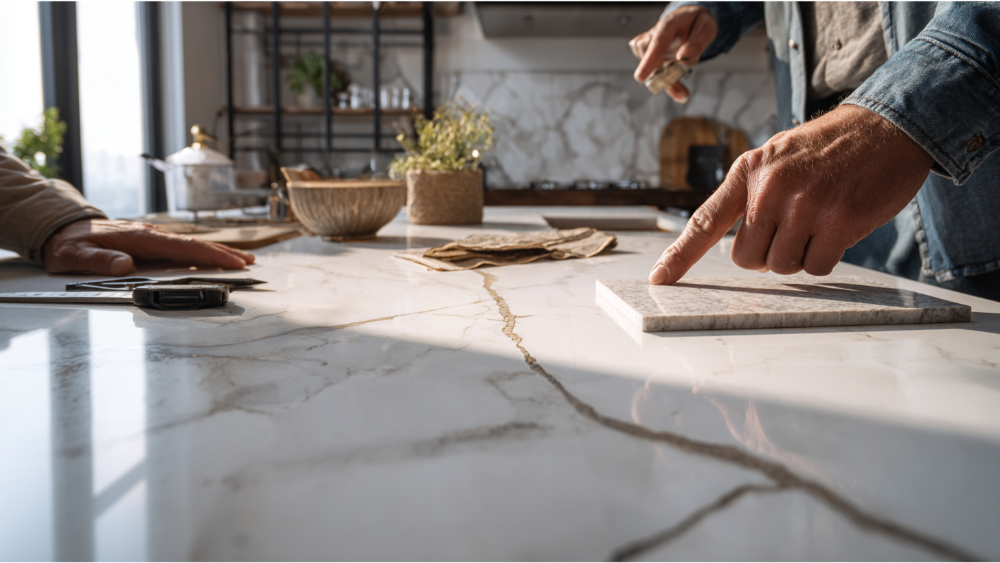
Most cracks appear due to stress, movement, or heat exposure. Even after a countertop is installed, shifting cabinets or repeated heat exposure can create cracks over time.
Is countertop cracking covered under warranty?
Most warranties cover defects in materials, not damage caused by improper installation, excessive weight, or heat damage.
Can heat alone crack a quartz countertop?
Yes, thermal shock from a hot pan or hot items can create cracks, especially with quartz countertops.
Are seams supposed to crack or separate?
No, seams should remain stable. If a seam fails, it is usually due to poor installation or lack of proper support.
How much overhang is safe without support?
This depends on the material, but most overhangs require proper support to handle body weight and heavy objects.
Can a cracked countertop be repaired without replacing it?
Yes, many cracks can be repaired using epoxy, but larger structural cracks may require replacement.
Which countertop material is least likely to crack?
No countertop material is completely immune. Granite, quartz, marble, and other materials can all crack if not properly supported or exposed to excessive stress.
Final Thoughts: Preventing Countertop Cracks Starts With the Right Team
Understanding the most common causes and reasons countertop cracks happen helps homeowners make better decisions. Most cracks are preventable with proper installation, proper support, and smart daily habits.
Key takeaways include avoiding heat damage, ensuring cabinets are level, and making sure every countertop is properly supported.
Whether you choose granite, quartz countertops, marble, or other materials, reducing stress and eliminating weak points is the best way to prevent cracks.
The best course is always to plan ahead. A properly installed countertop will perform better, last longer, and resist cracks over time.