What Is the Best Countertop Material in 2025
 Choosing what is the best countertop material for your kitchen is a big decision in any kitchen remodel. You want beauty, durability, ease of care, and a look that elevates your home value. In this guide we explore all the countertop materials available today, compare quartz countertops, granite countertops, marble countertops, and natural stone countertops, and also dig into specialty options like butcher block countertops, soapstone countertops, solid surface, engineered stone, concrete, tile, and laminate. We’ll help you find the perfect match between style, durability, maintenance, and cost.
How to Choose the Best Kitchen Countertop Material
How to Evaluate Countertop Materials
Before comparing materials, it helps to understand how to judge them. The best countertop for your kitchen depends on your lifestyle, how often you cook, and how much maintenance you’re willing to do. Here are the main factors to consider:
1 | Durability
How well does the surface resist scratches, chips, and everyday wear? Look for descriptions like scratch resistant or extremely durable if you have a busy kitchen.
2 | Heat Resistance
Can the surface handle hot pans directly, or do you always need a trivet or hot pad? Materials vary widely in how much heat they can withstand.
3 | Stain Resistance
How well does it resist spills like wine, oil, or citrus juice? Non-porous materials are the easiest to keep spotless.
4 | Maintenance
Does it need sealing or special upkeep? Some materials require regular maintenance, while others are low maintenance and easy to care for long-term.
5 | Aesthetics
How does it look and feel in your space? Consider the color, pattern, and texture, as well as how it pairs with your cabinets, backsplash, and overall kitchen style.
6 | Cost
Think beyond the sticker price. The total cost includes the material itself, fabrication, and installation, usually measured per square foot.
7 | Resale Appeal
Some countertops increase your home’s value or appeal to future buyers. Choose something that enhances both your kitchen’s function and its desirability.
A smart decision balances all these factors, durability, maintenance, cost, and aesthetics, while matching the way you live and use your Countertop Materials: Pros, Cons, and Best Use Cases
Below are the leading countertop options in 2025. For each we analyze the benefits, drawbacks, cost, and when it might be the excellent choice for you.
Quartz Countertops
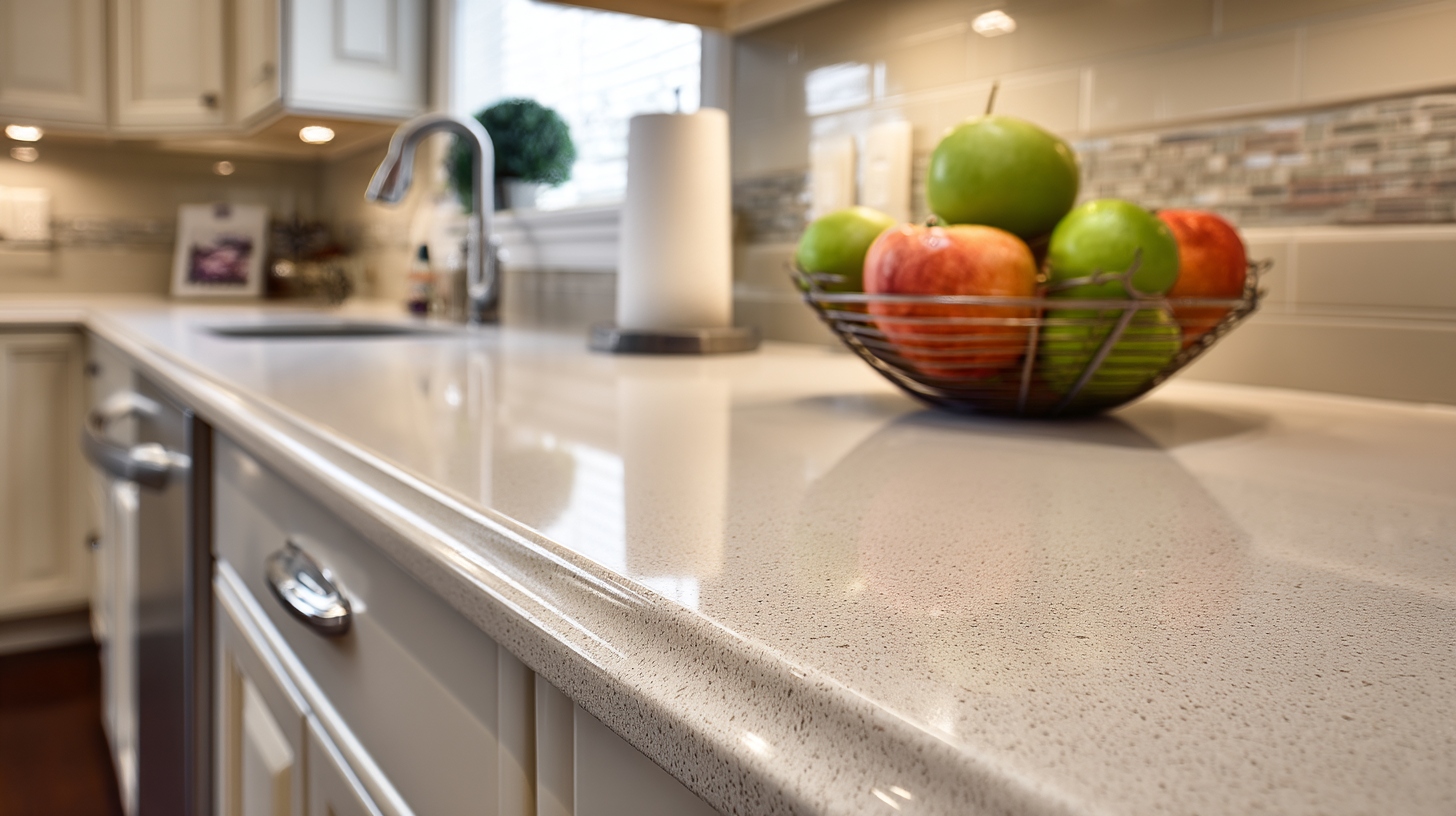
Quartz countertops are made from ground quartz mixed with resins and pigments. Because quartz is among the hardest minerals, these surfaces are highly durable, stain resistant, and scratch resistant. They are also non porous, so they don’t require sealing and are considered low maintenance.
Pros
- Excellent stain resistance without need for sealing
- Strong resistance to daily wear and scratching
- Broad array of unique colors, veining, and designs that mimic natural stone
- Very consistent pattern (unlike natural variations in stone)
- Great for modern kitchens with clean, uniform style
- In many kitchens, quartz is now the go‑to choice for homeowners weighing performance and appearance
Cons
- The resin content limits true heat resistance, placing hot pans directly can cause damage, so use hot pads
- As a manufactured product, it may lack the variance and natural character of natural stone countertops
- It tends to cost more than mid‑range options
- In large installations, seams can be visible
Best for
If you want a low maintenance, durable, stylish countertop that performs well under normal use, quartz countertops are often the best countertop material for many homeowners. They strike a balance between performance and aesthetics better than many other options.
Granite Countertops / Natural Stone Countertops
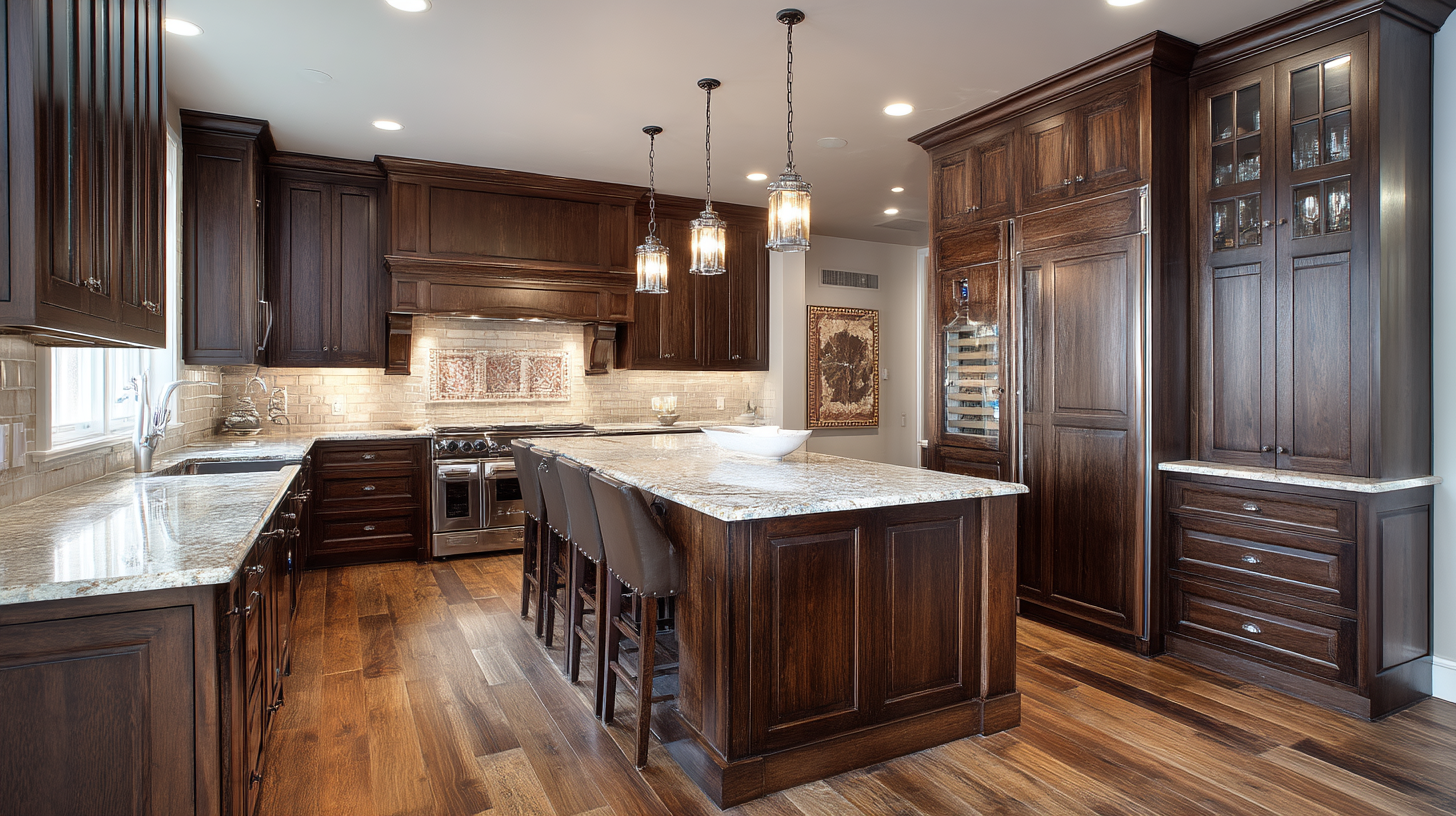 Granite has long been a classic in kitchen design. As a natural stone, granite offers unique textures, rich patterns, and strong performance traits. Many homeowners still prefer the authenticity of granite countertops or natural stone countertops.
Pros
- Excellent heat resistance – it can better withstand heat than many engineered surfaces
- Natural variation: each slab is unique, with depth, texture, and natural beauty
- Good scratch resistance (though not entirely immune)
- When properly sealed, it can resist stains well
Cons
- Requires sealing / regular sealing / frequent sealing to maintain stain resistance
- Over time, seal may wear, and high maintenance is a factor
- Natural variation means some slabs are better than others
- Edges, cuts, seams must be done well to prevent chipping or weakness
- Per square foot cost for premium slabs and installation can be high
Best for
Granite countertops are excellent when you want natural stone appeal and robust performance. If you are okay doing periodic care (sealing, maintenance), granite can last decades and boost your home value.
Marble Countertops
Marble is prized for its elegance, soft veining, and classic appearance. In many dream kitchens, marble adds luxury and prestige.
Pros
- Elegant look with subtle veining, timeless beauty
- Adds a sense of luxury and high-end appeal
- Great for lighter usage zones or baking areas
Cons
- Relatively low inherent stain resistance; acids like vinegar or citrus can etch
- Requires frequent sealing and care, so it’s high maintenance
- It is more prone to scratching than harder stones
- Not ideal for heavy cooking zones or active kitchens
Best for
Marble countertops work best when used selectively, or in kitchens with lower wear. If you cherish beauty over brute durability and are prepared to protect the surface, marble can deliver that luxe feel.
Quartzite / Advanced Natural Stone
Quartzite is a natural stone that offers a hybrid between granite and marble, more robust and harder than marble, but still possessing organic veining.
Pros
- Superior heat resistance and durability compared to marble
- Unique veining and natural character
- When sealed, good stain resistance
- Strong, so more scratch resistant than softer stones
Cons
- Needs regular sealing
- Premium cost per square foot
- Slab selection is critical to avoid weak zones
Best for
If you want natural stone countertops with more durability than marble but retain that organic stone aesthetic, quartzite is often the ideal choice.
Butcher Block Countertops / Butcher Block
Butcher block, made of strips of wood glued together (often maple, walnut, or oak), adds warmth and a rustic aesthetic or rustic charm to kitchens.
Pros
- Deep, organic wood look that adds warmth
- Can be sanded and refinished to repair damage or wear
- Ideal for chopping zones or island tops, even as integrated cutting boards
Cons
- Wood is porous and sensitive to moisture and stains
- Requires regular maintenance, oiling, sealing
- More vulnerable to scratches and dents than stone
- Can warp or swell if exposed to moisture
Best for
Butcher block countertops are perfect as accent surfaces or in kitchens aiming for a cozy, natural, rustic charm. Most homeowners pair them with harder stone or quartz surfaces in high‑use zones.
Soapstone Countertops
Soapstone is an old favorite in historic kitchens. It’s a dense, soft stone that brings a matte, charcoal or slate look.
Pros
- Good heat resistance and performs well with hot pans
- Smooth, tactile surface with a subdued stone aesthetic
- Develops a patina over time which many homeowners find desirable
Cons
- Softer than granite, more prone to scratching
- Dark color shows wear or lighter scratches
- Needs occasional oiling to maintain appearance
- Moderate stain resistance, but better when sealed or oiled
Best for
Soapstone countertops appeal to those wanting a moody, natural look in a kitchen that gets moderate use and who enjoy the evolving, aged character.
Solid Surface
 Solid surface is a manufactured material (e.g. Corian) with consistent color and pattern throughout.
Pros
- Smooth, seamless surfaces that integrate sinks and backsplashes
- Repairable: scratches or marks can often be buffed out
- Clean modern look, easy care
Cons
- Limited in heat resistance, not ideal for direct hot cookware
- Can scratch more easily than stone
- Doesn’t replicate the look of natural stone as fully
Best for
If you want a low maintenance surface with seamless joints, especially in a modern or minimal kitchen, solid surface may be the right countertop option.
Concrete Countertops
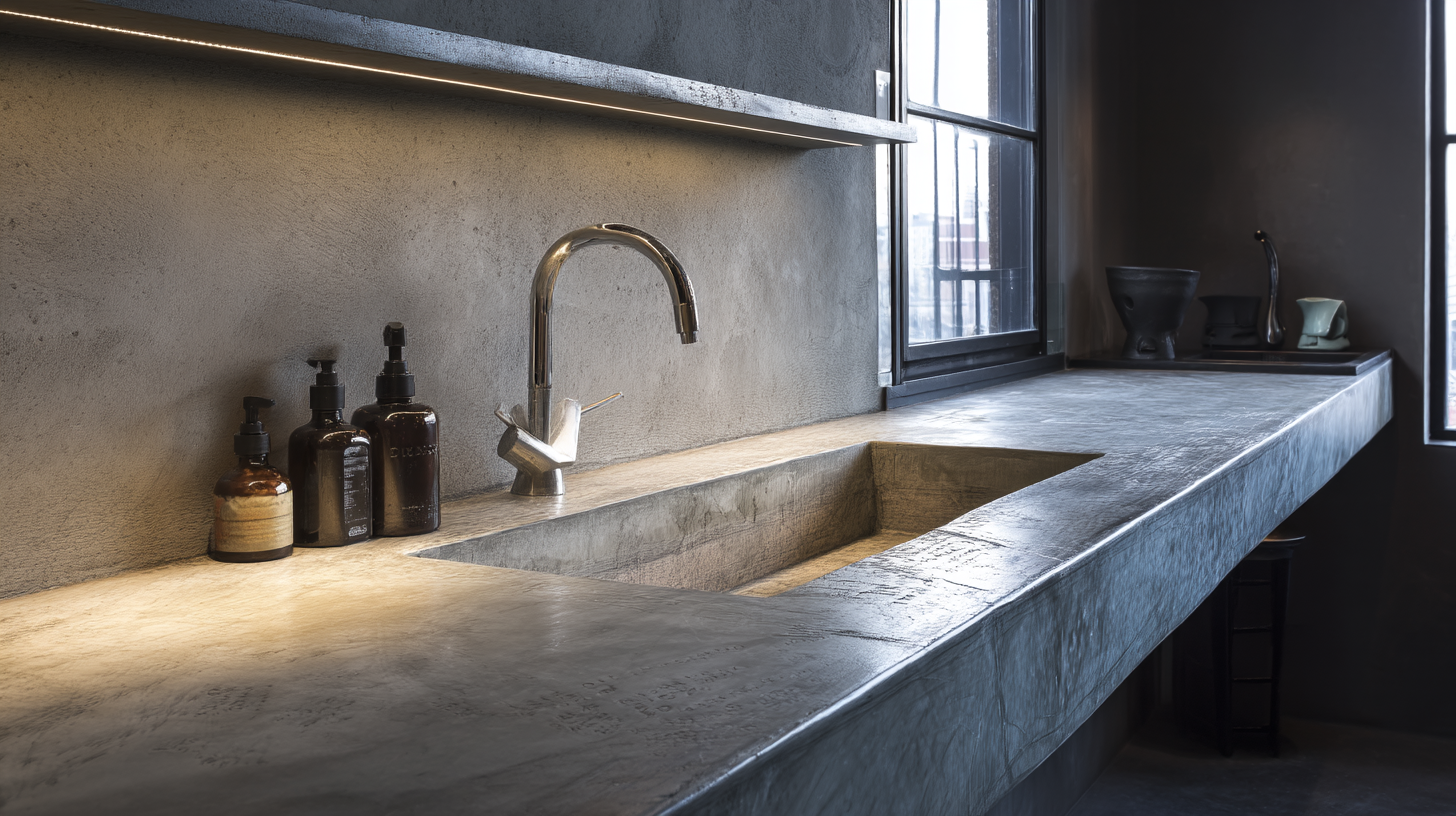
Concrete is customizable and can be molded into unique shapes, colors, and textures.
Pros
- High design flexibility and unique statement surface
- Good resistance to heat and durable when reinforced
- Pairs well with industrial or modern aesthetic
Cons
- Prone to minor cracks, needs reinforcement
- Must be sealed regularly
- Heavy and high cost per square foot
- Requires expert installation
Best for
Concrete works best when the countertop is a design focal point and you are willing to invest in craftsmanship and care.
Tile and Porcelain Slab Countertops
Tile was once common; now large-format porcelain slabs are also popular in kitchens.
Pros
- Very good resistance to heat, stains, and scratching
- Versatility in style, pattern, or mimic natural stone looks
- Cost options vary; tile can be more budget friendly
Cons
- Grout lines can require added cleaning or maintenance
- Edge treatments and transitions can be complex
- Sealing of grout or edges needed
Best for
Tile or porcelain slabs serve as strong budget friendly or design-forward alternatives, especially when you want stone aesthetics with flexible cost.
Laminate Countertops
Laminate is made from layers of plastic bonded to particle board, an economical option.
Pros
- The most cost effective choice among countertop options
- Many patterns, some designed to mimic natural stone
- Very low upfront investment
Cons
- Limited heat resistance, can be damaged by hot pans
- Prone to chipping, scratching, and delamination over time
- Not as durable as stone, quartz, or engineered materials
Best for
Laminate is best for secondary kitchens, rentals, or tight budgets where style and performance demands are modest.
Comparing All the Options: Side‑by‑Side
Below is a comparison of these countertop materials based on our important criteria:
| Material | Heat Resistance | Stain Resistance | Maintenance | Durability / Scratch Resistance | Cost per Square Foot | Aesthetic Strengths | Drawbacks |
|---|---|---|---|---|---|---|---|
| Quartz | Moderate | Excellent | Low | Highly durable | $$–$$$ | Wide colors, mimic natural stone looks | Sensitive to high heat |
| Granite / Natural Stone | High | Good (with sealing) | Moderate / Regular sealing | Excellent | $$–$$$ | Unique slabs, natural beauty | Needs sealing, variation |
| Marble | Low–Moderate | Low | High / Frequent sealing | Moderate | $$$ | Elegant veining, aspirational | Easily stained or scratched |
| Quartzite | High | Good | Moderate / Sealing | Excellent | $$$ | Natural stone look + toughness | Premium cost, sealing needed |
| Butcher Block / Wood | Moderate | Moderate | Regular upkeep | Moderate | $$ | Warm, organic, rustic charm | Sensitive to moisture, dents |
| Soapstone | High | Moderate | Occasional oiling | Moderate | $$–$$$ | Soft, dark stone aesthetic | Shows lighter scratches |
| Solid Surface | Low | Good | Low | Moderate | $$ | Seamless, modern, clean | Low heat tolerance |
| Concrete | Moderate | Good | Sealing / Crack repair | High (with reinforcement) | $$$ | Bold, custom, sculptural | Cracks, weight, cost |
| Tile / Porcelain | High | Good | Grout care | High | $–$$$ | Many styles, mimic stone | Grout lines, edge complexity |
| Laminate | Low | Moderate | Low | Low | $ | Many patterns, mimic stone | Easily damaged, not premium |
Trends in Kitchen Countertop Materials for 2025
 1 | Designs That Boldly Mimic Natural Stone
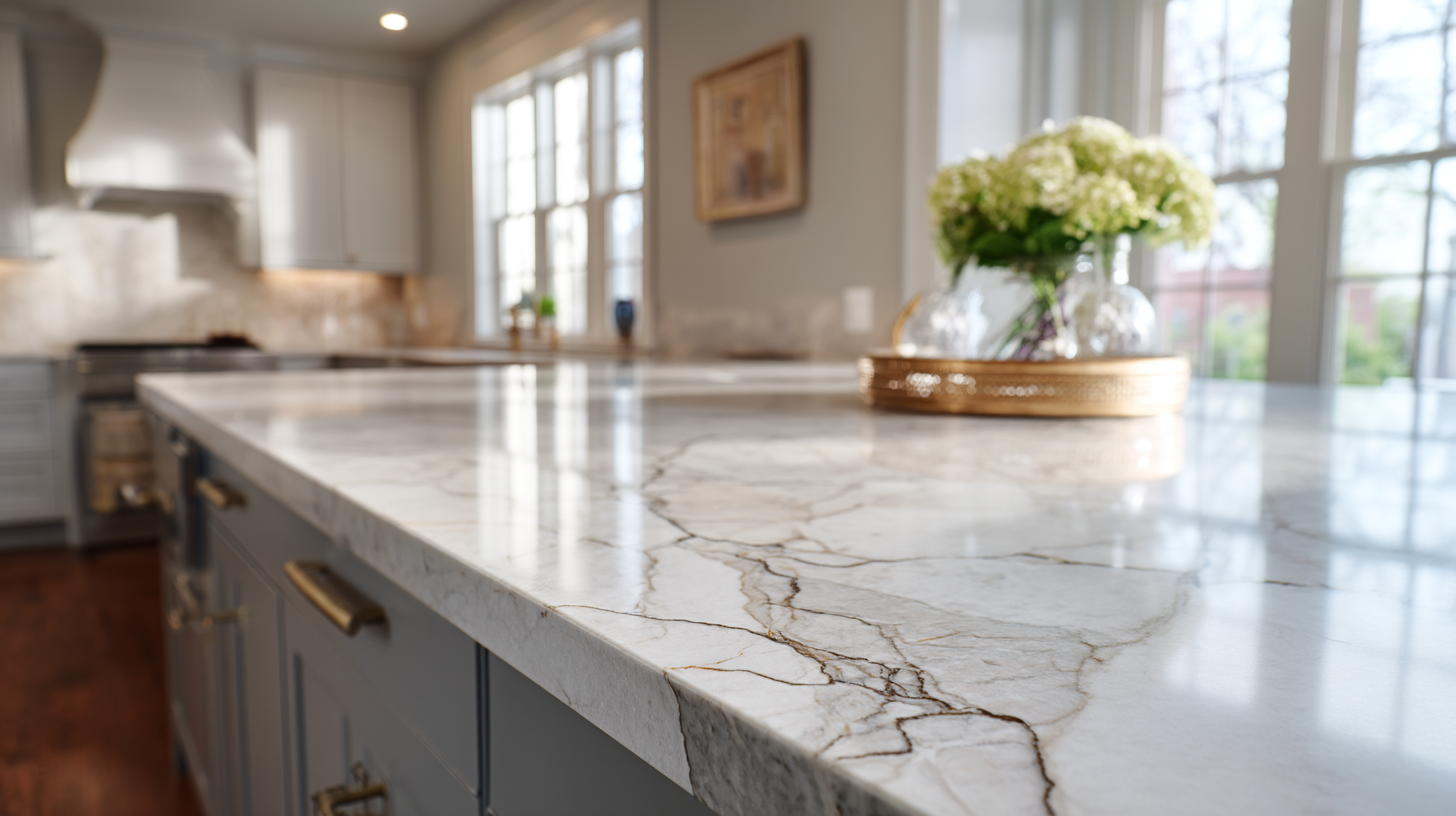 1 | Designs That Boldly Mimic Natural Stone
In 2025, many quartz countertops and porcelain slabs emphasize bold veins, soft tonal shifts, and patterns that mimic natural stone more convincingly than ever. This gives the appeal of natural stone countertops with the performance advantages of engineered surfaces.
2 | Seamless Integrations, Waterfall Edges, and Slab Backsplashes
Homeowners are favoring clean, continuous countertop surfaces that extend as backsplash or down in waterfall edges. This creates a sleek, high-end look in modern kitchens and keeps the visual flow uninterrupted.
3 | Sustainable and Recycled Materials
Eco‑conscious materials, recycled glass, paperstone, composite surfaces, are gaining traction among homeowners who prioritize sustainability in their dream kitchen. These options offer unique textures and stories while still being stain resistant and durable enough for daily use.
4 | Mixed Material Strategies
Designers increasingly pair materials: a quartz countertop in high‑use zones paired with butcher block countertops on islands or prep areas. This lets you balance function and style, giving warm wood accents next to high‑performance surfaces.
5 | Warm Tones and Earthy Palettes
Neutrals are shifting toward warmer tones, beiges, greiges, and soft greens. Many surfaces now showcase subtle veining in warmer hues to soften stark contrasts and bring warmth to the space.
Frequently Asked Questions
What is the most durable kitchen countertop material?
For natural options, granite and quartzite tend to be the most durable. Quartz countertops (engineered stone) also hold strong as an extremely durable and consistent surface.
Which countertop material requires the least maintenance?
Quartz is the leader in low-maintenance design. It is non porous, does not require sealing, and resists staining. Solid surface options also demand little care, though heat caution is needed.
Which countertop material is most heat resistant?
Natural stone like granite and quartzite typically outperform engineered surfaces when it comes to heat. Soapstone also handles heat well. Always use hot pads for direct contact with hot cookware.
What is the most budget friendly countertop option?
Laminate is the most cost effective per square foot. Tile and solid surface can also be budget friendly depending on grade and labor.
Does quartz mimic natural stone?
Yes, many quartz products are engineered to mimic natural stone, with patterns and veining that visually echo marble or granite. That gives you the aesthetic without many of the downsides.
How much does countertop material cost per square foot?
Costs vary widely: laminate might run $20–$40 per square foot, mid‑range quartz and granite might be $50–$100, and premium marble, quartzite, or concrete surfaces can go $100–$250+ per square foot including installation.
Are there kitchen countertop materials that are easily scratched?
Yes. Softer materials like marble, softer woods, or lower-end laminates can be easily scratched. That’s why scratch resistance is a key factor.
Can a butcher block countertop work as my main surface?
Yes, but only if you commit to regular maintenance and sealing. Many homeowners choose wood in secondary zones or islands to balance beauty with performance.
Final Thoughts: Which Countertop Material Is Best for You?
When someone asks “what is the best countertop material,” there’s no one answer. The best choice for your home depends on your cooking habits, how much maintenance you’ll tolerate, your style desires, and your budget.
If you want a strong balance between performance, aesthetics, and longevity, quartz countertops often rise to the top. They deliver high durability, stain resistance, ease of care, and a wide design palette. If you appreciate the natural charm of stone, granite or quartzite may be better fits. For pure elegance in low‑use zones, marble countertops shine. And for unique character, butcher block, soapstone countertops, concrete, or tile/porcelain may be just the touch you need.
We believe in helping homeowners find their dream kitchen with surfaces that look great and perform reliably for years. Ready to explore your countertop options in person?
Let Kitchen Search Help You Make the Right Choice
We offer design consultations, access to top slab selections, fabrication, and professional installation tailored to your space and lifestyle. Don’t guess, let us guide you to a countertop surface you’ll love and live with.