What Spacing Is Recommended Between Cabinets and Ceilings?
Why Cabinet Spacing Between Cabinets and Ceilings Matters in Modern Kitchen Design
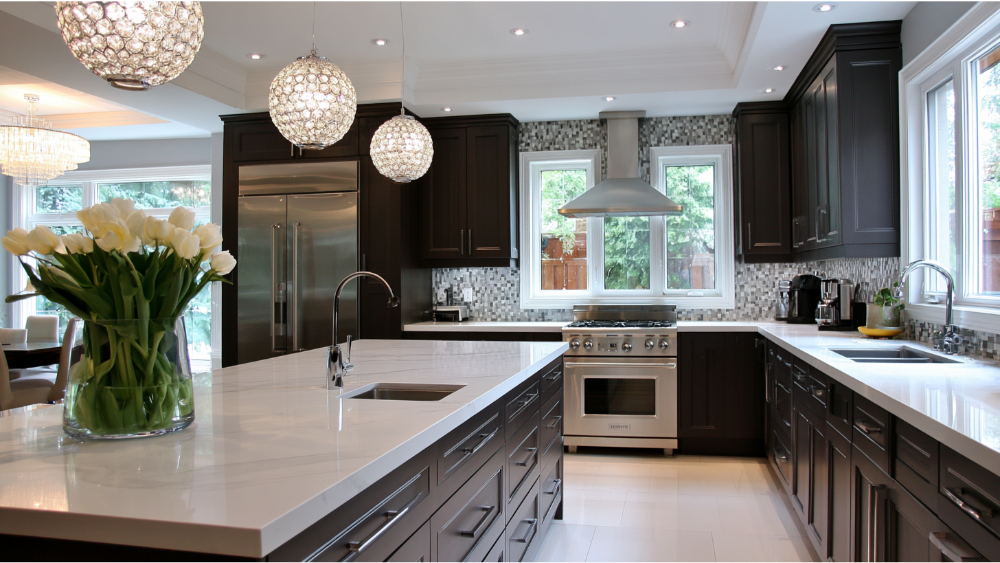
What spacing is recommended between cabinets and ceilings is one of the most important planning questions in any kitchen remodel, especially as homeowners move toward more efficient and visually seamless kitchen design. The relationship between cabinets and ceilings affects storage, functionality, proportions, and how finished the kitchen feels overall. In many homes, older layouts left a large gap above cabinets, but in 2026 that approach is being replaced by tighter, more intentional design choices that prioritize full vertical use of space.
Today’s kitchens are designed to eliminate wasted space wherever possible. The way cabinets meet the ceiling influences storage capacity, visual flow, and long-term practicality. Whether updating existing cabinets or installing new cabinets in a full kitchen remodel, the goal is to maximize storage while maintaining clean, built-in aesthetics that feel aligned with modern expectations.
Standard Cabinet to Ceiling Spacing Guidelines in 2026
8 Foot Ceiling Homes and Traditional Cabinet Spacing
In many older homes with an 8-foot ceiling, traditional kitchen layouts left a 12 to 18 inch gap above cabinets. This created open cabinet space that was often used for decorative elements or occasional storage. While this approach was once standard, it is now considered outdated in most modern kitchen remodel projects.
Leaving this gap results in unused wall space that collects dust and interrupts visual continuity. Instead, modern kitchen design favors extending upper cabinets upward or using taller cabinets to reduce empty space and create a more cohesive look between cabinets and ceiling.
Modern Standard for Ceiling Height Integration
The modern standard for cabinets and ceiling alignment is typically a 0 to 2 inch gap. This small space allows for installation tolerance because ceiling height is rarely perfectly level in most homes. This approach creates a seamless transition between cabinets and ceiling while maintaining proper fit and alignment.
Most upper cabinets today are designed to reach near ceiling height, often finished with crown molding or trim to complete the transition. This eliminates dead space, increases storage, and improves overall kitchen functionality without sacrificing design quality.
9 Foot and 10 Foot Ceiling Kitchen Designs
In kitchens with 9-foot or 10-foot ceiling height, cabinet design becomes more important for maintaining proper proportions. Designers often recommend stacked cabinets or tall cabinets that extend vertically to meet ceiling height more effectively.
Without proper planning, large gaps above cabinets can make the kitchen feel unfinished and visually unbalanced. By using custom cabinetry or extended wall cabinetry, homeowners can create more storage space while improving architectural flow throughout the kitchen.
Why Ceiling Height Cabinets Are the Modern Standard
Maximizing Storage and Cabinet Functionality
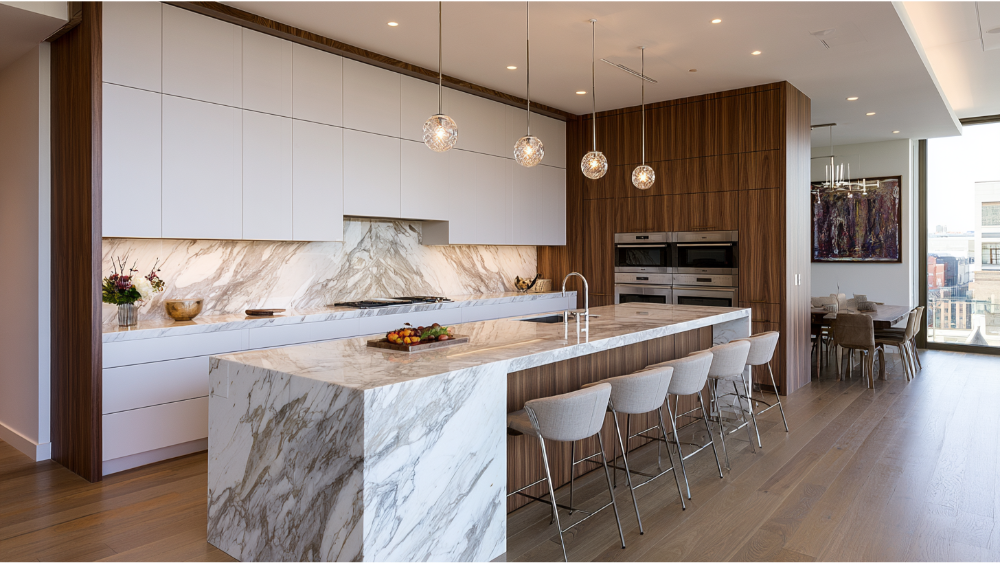
One of the primary reasons homeowners choose ceiling height cabinets is increased storage. Extending cabinets upward provides significantly more storage space for appliances, seasonal items, and less frequently used kitchen tools. This is especially beneficial in small kitchens where maximizing every inch of storage is important.
Upper cabinets are often used to store items like coffee makers, cookware, and pantry goods, freeing up countertop space for daily tasks and improving overall kitchen functionality.
Creating Clean Lines and Built-In Kitchen Design
Modern kitchen design emphasizes clean lines and a built-in appearance. When cabinets stop short of the ceiling, the gap can make the kitchen feel incomplete or visually disconnected. Extending cabinets upward creates a continuous vertical line that enhances proportions and improves visual interest.
This approach creates a more attractive and intentional design where cabinetry feels like part of the home architecture rather than separate furniture pieces placed against the wall.
Reducing Dust and Improving Maintenance
Open space above upper cabinets often collects dust, making it difficult to clean and maintain. By minimizing or eliminating this gap, homeowners reduce maintenance requirements and improve cleanliness throughout the kitchen.
Sealing or reducing this space also prevents unnecessary clutter buildup and keeps the kitchen more practical for everyday use.
When Leaving Space Between Cabinets and Ceiling Still Makes Sense
Budget and Stock Cabinet Limitations
Not every kitchen remodel allows for fully custom solutions. Stock cabinets come in standard dimensions that may not align perfectly with ceiling height, resulting in a visible gap above cabinets.
In these cases, leaving a controlled gap may be more cost effective than replacing cabinetry entirely. Crown molding or trim is often used to finish the transition between cabinets and ceiling, helping improve appearance without increasing cost significantly.
Traditional and Decorative Kitchen Styles
Some kitchen design styles intentionally incorporate cabinet space above upper cabinets for decorative purposes. Traditional, farmhouse, or cottage style kitchens may use this area for decorative elements such as baskets, plants, or seasonal items.
While less common in modern kitchen design, this approach can still be effective when it is intentional and aligned with the overall style of the kitchen.
Low Ceiling and Older Home Considerations
In older homes, ceiling height and wall conditions are not always consistent. Uneven ceiling surfaces or low ceiling height can make full cabinet extension less practical.
In these situations, a small gap can help maintain better proportions and avoid making the kitchen feel cramped. Proper planning ensures cabinets still function well while adapting to structural limitations.
Installation Factors That Affect Cabinet and Ceiling Spacing
Uneven Ceiling Conditions in Most Homes
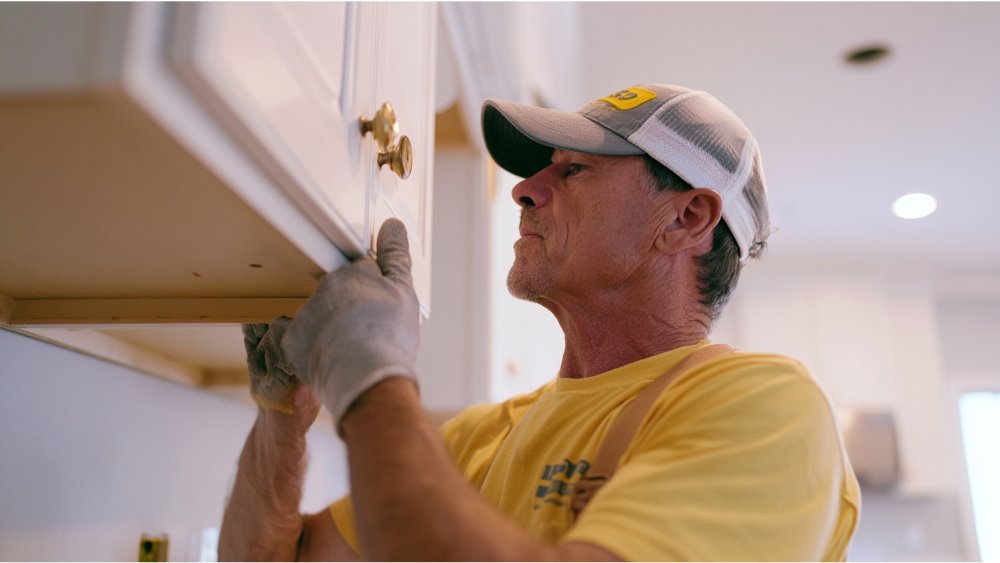
In most homes, ceiling surfaces are not perfectly flat. This makes precise cabinet installation more complex, especially when aiming for tight alignment between cabinets and ceiling.
Installers take multiple measurements across the kitchen to account for variations. This ensures cabinets are installed evenly and maintain consistent spacing throughout the room.
Expansion, Materials, and Long Term Functionality
Cabinets are affected by temperature and humidity changes, which can cause materials to expand or contract over time. A small installation buffer helps prevent pressure buildup between cabinets and ceiling.
This practical consideration ensures long-term durability while maintaining a clean and professional finish throughout the kitchen.
Crown Molding and Trim for Finished Appearance
Crown molding is commonly used to bridge the gap between cabinets and ceiling. It adds architectural detail while creating a smooth transition between surfaces.
Trim helps frame upper cabinets and enhances visual cohesion. When properly installed, crown molding makes cabinets appear fully integrated into the kitchen design while improving proportions and visual balance.
Cabinet Types and How They Impact Ceiling Spacing
Stock Cabinets and Fixed Dimensions
Stock cabinets are manufactured in fixed sizes, which limits flexibility when matching ceiling height. This often results in visible gaps unless additional trim or filler panels are used.
While cost effective, stock cabinets provide less control over final cabinet height and overall fit within the kitchen space.
Semi-Custom and Custom Cabinet Solutions
Semi-custom cabinets offer more flexibility in dimensions, allowing better alignment with ceiling height and improving overall design accuracy. Custom cabinets provide the highest level of precision and are built specifically for the kitchen layout.
Custom cabinetry allows homeowners to maximize storage space while achieving a seamless built-in appearance that aligns perfectly with ceiling height and wall dimensions.
Design Strategies Based on Ceiling Height
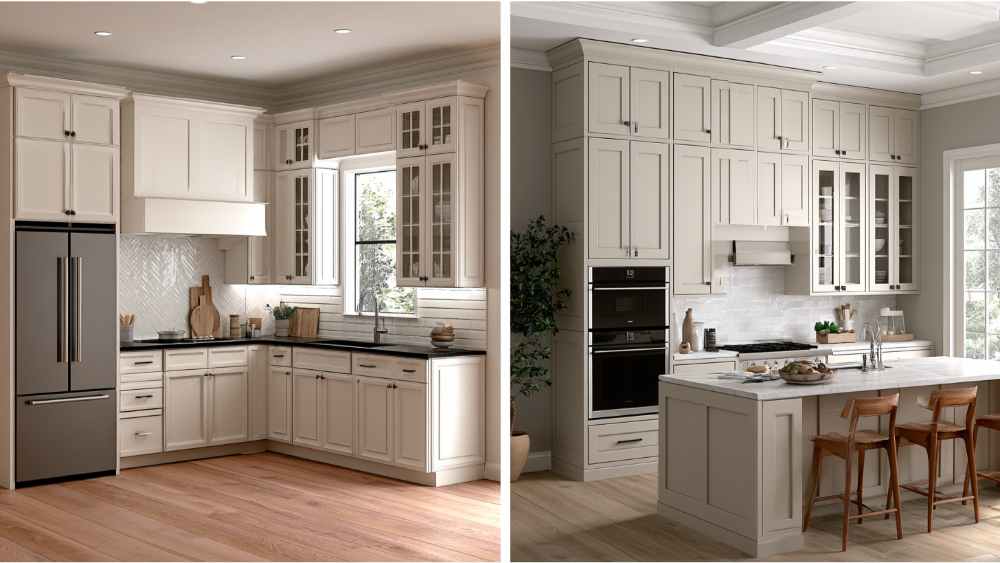
Standard 8 Foot Ceiling Kitchens
In kitchens with standard ceiling height, designers focus on maximizing vertical space while maintaining visual balance. Extending cabinets upward or using crown molding helps improve proportions and create the illusion of a taller room.
High Ceiling Kitchen Layouts
In kitchens with high ceilings, cabinets are often extended fully to ceiling height or stacked to maintain balance. This increases storage capacity and enhances architectural presence within the kitchen.
Balancing Proportions and Functionality
Successful kitchen design depends on balancing cabinet height, ceiling height, floor layout, and overall room proportions. Proper planning ensures cabinets improve both functionality and visual structure without wasting space.
Common Mistakes in Kitchen Cabinet Ceiling Spacing
A common mistake in kitchen remodeling is leaving unnecessary space above upper cabinets without purpose. This often creates dead space that collects dust and reduces storage efficiency.
Another mistake is selecting cabinets without accurate measurements of ceiling height. This can lead to poor alignment, wasted storage potential, and reduced visual appeal. Careful planning ensures cabinets fit properly and create a cohesive design.
Professional Recommendations for Kitchen Cabinet Design
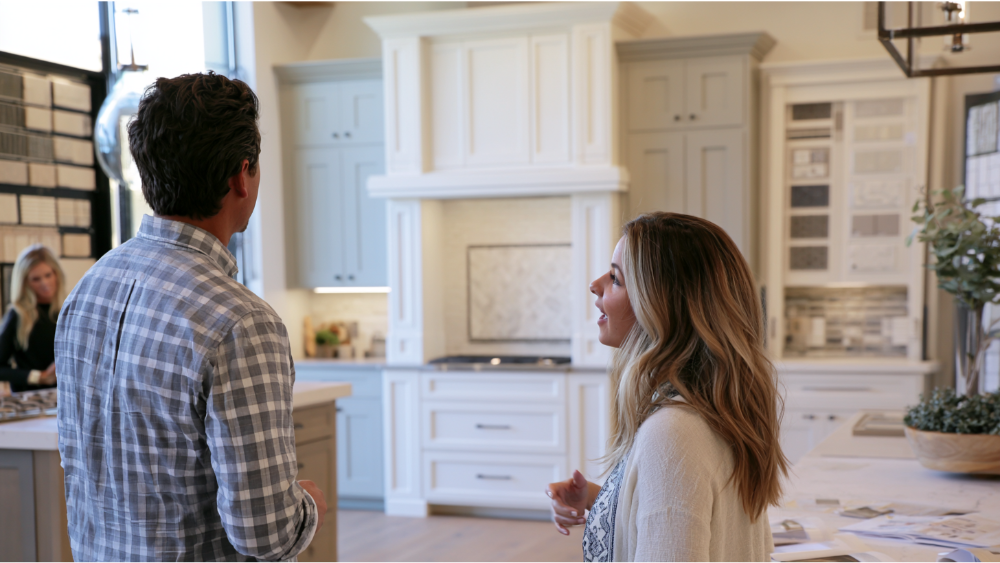
Professionals generally recommend minimizing gaps between cabinets and ceiling whenever possible. In most modern kitchens, ceiling height cabinets provide the best balance of storage, functionality, and visual appeal.
Accurate measurements are essential before installation to ensure cabinets align properly with ceiling height and create a consistent, built-in appearance throughout the kitchen.
Cost Considerations for Cabinet to Ceiling Design Choices
The cost of cabinets varies depending on whether stock, semi-custom, or custom cabinetry is used. Stock cabinets are more affordable but may require additional trim or modifications to address gaps.
Custom cabinets are more expensive but provide better alignment with ceiling height and significantly increase storage capacity. Many homeowners choose custom solutions during a kitchen remodel because of the long-term value and improved functionality.
Frequently Asked Questions
What is the standard height of wall cabinets?
Standard wall cabinets typically come in heights of 30, 36, or 42 inches. These sizes accommodate most ceiling heights and allow for functional storage and accessibility.
How much space should be left between cabinets and the ceiling?
The recommended spacing between cabinets and ceilings is generally 0 to 2 inches to allow for installation tolerance. Larger gaps of 12 to 18 inches are sometimes left for decorative purposes but may collect dust and look unfinished.
Are ceiling height cabinets more functional than standard cabinets?
Yes, ceiling height cabinets provide 50-100% more storage space compared to standard height cabinets. However, the top shelves may be harder to access and are often used for seasonal or rarely used items.
Can crown molding help with gaps between cabinets and ceilings?
Absolutely. Crown molding can bridge small gaps between cabinet tops and ceilings, creating a seamless and finished appearance while adding architectural detail.
What are the challenges of installing cabinets flush to the ceiling?
Installing cabinets flush to the ceiling requires precise measurements and leveling due to uneven ceilings. It can increase installation costs and may require step stools or ladders for accessing higher shelves.
How do design preferences influence cabinet-ceiling spacing?
Design preferences impact whether you choose full-height cabinets or leave gaps for decorative displays. Some prefer the clean, built-in look of ceiling height cabinets, while others favor the visual interest and breathing room provided by a small gap.
Conclusion
Choosing the right spacing between cabinets and ceilings is a crucial decision that balances storage needs, aesthetics, and functionality. Modern kitchen design trends favor extending cabinets closer to the ceiling to maximize extra storage space, create clean lines, and reduce dust accumulation. However, considerations such as ceiling height, budget, and design preferences may lead homeowners to leave a small gap, often finished with crown molding or decorative elements. Whether opting for standard height cabinets with breathing room or seamless ceiling height cabinetry, careful planning and accurate measurements ensure a functional and visually appealing kitchen that meets your lifestyle needs and enhances the overall home design.